
Why traditional recruitment methods no longer work in the pharmaceutical industry

Nicolas Grancher • 18 août 2025


The End of an outdated HR model


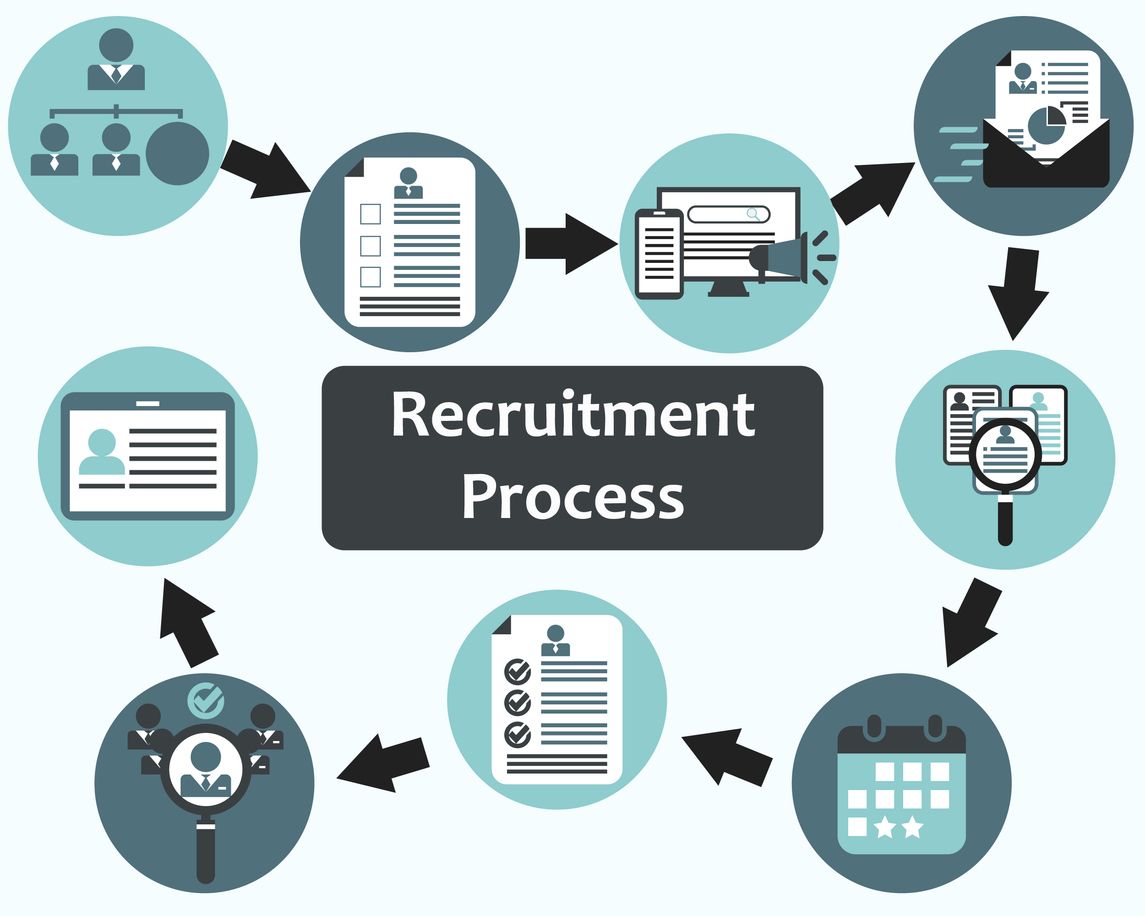
For decades, recruitment in the pharmaceutical industry relied on a model as rigid and industrial as a production line: generic job description, CV screening, HR interview, technical validation, hierarchical approval. A linear process often long, impersonal, and disconnected from the human realities of the role.

But this model, inherited from another era, no longer holds up against today’s challenges.
Between talent shortages, digital transformation, the rise of hybrid roles, and renewed candidate expectations, pharma recruitment must be rethought entirely. It’s no longer about filtering it’s about attracting. No longer about control it’s about building trust.

Here are 7 key reasons why traditional methods have become obsolete in the pharmaceutical industry and what you can do to adapt.


1. A talent shortage that redefines the rules


The imbalance between supply and demand


The growth of biotechs, the intensification of clinical trials, advances in gene and cell therapy, and increasing regulatory demands have triggered a surge in hiring needs—without a proportional increase in talent supply.


Certain functions such as:

  • Regulatory Affairs
  • Pharmacovigilance
  • Biostatistics
  • Data Management
    …have become structurally scarce, sometimes with fewer than one available profile for every three open positions.


The rise of hybrid profiles


The expansion of digital tools has led to the emergence of cross-disciplinary profiles: scientist + data, physician + project management, researcher + communicator.

Yet, traditional recruitment frameworks too focused on rigid criteria (school, years of experience, job titles) fail to identify these high-potential, often unconventional profiles.


2. Candidate expectations have radically changed


More purpose, less hierarchy


New generations don’t just want to work in pharmaceutical industry they want to understand their contribution. A company with a clear, visible, and authentic mission attracts more than a big name lacking human vision.


Today, candidates ask themselves:

  • What is the social value of my role?
  • Will my manager truly listen to me?
  • Will I be able to learn and grow here?


The search for a healthy balance


Models based on “mandatory on-site presence, rigid schedules, systematic reporting” no longer work. Pharma candidates now expect:

  • Flexibility (remote work, adaptable hours)
  • Recognition (even beyond technical results)
  • Clarity on career development opportunities

Job ads that ignore these aspects now completely miss their target audience.


3. Processes that are too slow and too rigid


Time to hire is now critical


A slow recruitment process today means losing the candidate. 70% of pharma professionals accept another offer while still waiting for a response (source: LinkedIn Talent Trends).

Frequent causes include:

  • Excessive interview stages
  • Absent or overloaded decision-makers
  • Poor coordination between HR and business teams

A response time exceeding 10 days drastically reduces candidate interest—and can even harm the company’s reputation.


Outdated evaluation criteria


Requiring 7 years of experience where 3 are sufficient, or rejecting a candidate without the “right degree” despite proven skills: these outdated practices prevent HR innovation.


4. HR tools no longer aligned with modern practices


Traditional channels are saturated


Job ads on classic platforms (Indeed, APEC, Monster) generate large volumes of applications but few truly qualified profiles.

The most sought-after talents are elsewhere:

  • On LinkedIn, in specialized groups
  • In alumni networks
  • Through referrals and professional events


Candidate experience expectations have evolved


Today’s candidates expect:

  • Quick first contact
  • A smooth, digitalized process
  • Personalized feedback, even in case of rejection

Companies that fail to respond in time or send impersonal automated replies instantly lose attractiveness.


5. Employer branding has become essential


The role alone is no longer enough


A competitive salary and an attractive job description no longer suffice. Candidates want an experience, a vision, and a community. They want to understand:

  • The internal culture
  • How employees are treated
  • How much space there is for initiative and creativity


Online reviews carry massive weight


Candidates check:

  • Glassdoor
  • Indeed
  • LinkedIn testimonials

A poorly rated company seen as toxic or overly rigid will see its talent pool shrink dramatically.


6. The rise of soft skills in pharmaceutical industry


Soft skills are now strategic


The pharmaceutical industry is increasingly:

  • Collaborative (cross-functional projects)
  • Agile (frequent reorganizations)
  • International (multi-country teams)

Required skills now extend beyond scientific expertise. Companies are looking for people who:

  • Adapt quickly
  • Handle complex environments with ease
  • Communicate effectively


Inadequate evaluation tools


Traditional MCQs or personality tests can’t detect these qualities. More effective alternatives include:

  • Real or simulated job situations
  • Cross-team feedback
  • Contextual behavioral analysis tools (e.g., AssessFirst, PerformanSe)


7. A managerial culture often out of step


Rigid hierarchies are a barrier


Most pharma companies remain very vertical, with top-down management. This no longer aligns with today’s expectations especially among younger talent.


Employees now expect:

  • Inspiring leadership
  • Co-creation
  • Frequent feedback


Annual reviews are no longer enough


Today, HR and managers must be able to:

  • Listen continuously
  • Provide constructive, frequent feedback
  • Adapt roles to match employees’ real strengths

Conclusion: It’s time to reinvent pharmaceutical recruitment


The current situation is not a failure, but a strategic opportunity.
By rethinking the foundations of your recruitment process, you can:

  • Attract rare profiles
  • Reduce turnover
  • Strengthen your employer brand

It’s no longer about moving faster—it’s about moving smarter. With more purpose, more listening, and more agility.


FAQ

  • Why is pharmaceutical talent so difficult to recruit today?

    The number of qualified profiles is not keeping up with demand. Roles are evolving quickly, requirements are high, and talent is looking for more than just a job they want a mission.

  • What do candidates dislike about traditional processes?

    They find them too long, impersonal, and rigid. What they want is more transparency, speed, and genuine human interaction.

  • What is the alternative to traditional interviews?

    Collaborative formats, such as:

    Real-life job simulations

    Discussions with the future team

    More flexible “flash” interviews, followed by quick feedback

  • Is employer branding really a deciding factor?

    Yes. More than 70% of pharma candidates consider online reviews and internal reputation before applying.

  • How can you attract scientific profiles to hybrid roles?

    By highlighting:

    Internal career pathways

    Continuous training opportunities

    Testimonials from employees who have made the transition

  • Should you outsource your pharmaceutical recruitment?

    It makes sense if you lack time or expertise. But outsourcing should never come at the expense of conveying your cultural DNA.


par Nicolas Grancher 30 janvier 2026
An interview in the pharmaceutical industry rarely leaves candidates indifferent. Even experienced professionals, accustomed to demanding environments, often walk away with a mix of relief, doubt, and unanswered questions. “Was I clear enough?” “Did I say what I was supposed to say?” “Was it too formal? Not formal enough?” “Did we have the right feeling?” These questions are universal. Yet, they are rarely voiced. In a sector as rigorous as the pharmaceutical industry, emotions tend to have little space in the official discourse, even though they are omnipresent in candidates’ real experiences. This article aims to put words to what candidates truly go through during an interview, in order to better understand it, reduce unnecessary anxiety… and regain a sense of control over the experience. Immediate tension: being assessed without losing credibility From the very first minutes, many candidates experience a familiar sensation: the tension of being evaluated. Interviews are often structured, highly framed, and sometimes very technical. The setting is established quickly: competencies, responsibilities, compliance, processes. This framework can create a paradoxical feeling: - on one hand, it is reassuring (you know what to expect), - on the other, it is pressurising (you feel observed and analysed). Many candidates experience: - fear of giving an approximate answer, - concern about not being “at the expected level,” - the feeling that every word matters. This tension is normal. It does not indicate a lack of competence or poor preparation. It reflects an environment where mistakes carry a high cost. The weight of formality: between respect and distance Another frequent feeling is formality. In the pharmaceutical sector, interviews are often: - highly structured, - minimally improvised, - conducted by several interviewers. For some candidates, this framework feels safe. For others, it creates a sense of relational distance. Many candidates internally ask themselves: - “Can I be myself?” - “Should I stay strictly factual?” - “Is it appropriate to show my motivation?” This internal questioning can lead to significant mental fatigue. Candidates constantly juggle between who they are and who they believe they should appear to be. The strange feeling of constantly having to “prove” oneself Even for experienced profiles, interviews often revive a familiar sensation: the need to justify oneself. To justify: - career choices, - transitions, - periods of doubt, - technical limitations. Some candidates feel a sense of unfairness: “My career path is coherent why do I still have to defend it?” This feeling is particularly strong in a sector that values stability, compliance, and linear progression. Atypical career paths, although increasingly common, often require more explanation. Post-interview doubt: a universal experience Once the interview is over, another phase begins: the internal debrief. In the hours or days that follow, many candidates replay the conversation mentally: - a response they could have phrased differently, - a question they misunderstood, - a moment of hesitation. This doubt is amplified by two factors common in the pharmaceutical sector: - long response times, - limited or no detailed feedback. When information is missing, interpretation takes over. And interpretation fuels self-criticism. The “feeling”: a source of hope… and anxiety The feeling plays an ambiguous role in the candidate experience. When the exchange is smooth, human, and respectful, candidates often leave feeling hopeful. When it is colder or very formal, anxiety sets in. What many candidates don’t realise is that: - a very formal interview is not necessarily a negative signal, - a good interaction does not guarantee a positive decision. From the recruiter’s perspective, “feeling” does not always mean immediate alignment. It may simply reflect a highly standardised professional framework. The fear of not having been “enough” - Clear enough. - Precise enough. - Technical enough. - Convincing enough. This fear is particularly strong among candidates who: - compare themselves to others, - are aware of market tension, - know that similar profiles are competing for the role. It can create a lingering impression of never doing enough, even when the background is solid. What candidates rarely realise… but is very real  One important point deserves to be stated clearly: there is uncertainty on the recruiter’s side as well. Recruiters and hiring managers in the pharmaceutical sector: doubt - compare, - hesitate, - arbitrate. Silence or hesitation is not always linked to a negative impression. More often, it reflects the complexity of the decision-making process. How to better navigate the interview experience While not all parameters are within a candidate’s control, some levers can help: Accept discomfort Discomfort is part of the process. Resisting it only increases tension. Focus on clarity rather than performance Being understandable is more valuable than being impressive. Remember that an interview is a two-way meeting You are also assessing the environment, the team, and the culture. Avoid overinterpreting immediately afterward Let emotions settle before drawing conclusions. Regaining agency as a candidate Putting words to what you feel helps reduce confusion. Realising that these emotions are widely shared makes it easier to put things into perspective. An interview is not a verdict on your professional worth. It is one step, in a specific context, at a specific moment in time.
par Nicolas Grancher 30 janvier 2026
Un entretien dans l’industrie pharmaceutique laisse rarement indifférent. Même les profils expérimentés, habitués aux environnements exigeants, en ressortent souvent avec un mélange de soulagement, de doute et d’interrogations. « Est-ce que j’ai été assez clair·e ? » « Est-ce que j’ai dit ce qu’il fallait ? » « Est-ce que c’était trop formel ? Pas assez ? » « Est-ce que j’ai eu le bon feeling ? » Ces questions sont universelles. Pourtant, elles sont rarement exprimées. Parce que dans un secteur aussi rigoureux que le pharmaceutique, les émotions ont peu de place dans le discours officiel , alors qu’elles sont omniprésentes dans l’expérience réelle des candidats. Cet article propose de mettre des mots sur ce que vivent vraiment les candidats lors d’un entretien, afin de mieux comprendre, de dédramatiser… et de reprendre un peu de maîtrise sur l’expérience. Une tension immédiate : être évalué sans perdre sa crédibilité Dès les premières minutes, une sensation s’installe chez beaucoup de candidats : la tension de l’évaluation . Les entretiens sont souvent structurés, cadrés, parfois très techniques. Le décor est posé rapidement : on parle compétences, responsabilités, conformité, processus. Ce cadre peut générer un sentiment paradoxal : d’un côté, il rassure (on sait à quoi s’attendre), de l’autre, il met sous pression (on se sent observé, analysé). Beaucoup de candidats ressentent alors : la peur de dire une approximation, la crainte de ne pas être “au niveau attendu”, l’impression que chaque mot compte. Cette tension est normale. Elle ne signifie ni un manque de compétence, ni un défaut de préparation. Elle est le reflet d’un environnement où l’erreur a un coût élevé . Le poids du formalisme : entre respect et distance Un autre ressenti fréquent est celui du formalisme . Dans le secteur pharmaceutique, les entretiens sont souvent : très structurés, peu improvisés, menés par plusieurs interlocuteurs. Pour certains candidats, ce cadre est sécurisant. Pour d’autres, il crée une forme de distance relationnelle. Beaucoup se demandent alors : « Est-ce que je peux être moi-même ? » « Est-ce que je dois rester très factuel·le ? » « Est-ce que montrer mes motivations est approprié ? » Ce questionnement interne peut générer une fatigue mentale importante. Le candidat jongle en permanence entre ce qu’il est et ce qu’il pense devoir montrer . Le sentiment étrange de devoir “prouver” en permanence Même pour des profils expérimentés, l’entretien ravive souvent une sensation bien connue : devoir se justifier . Justifier : ses choix de carrière, ses transitions, ses périodes de doute, ses limites techniques. Certains candidats ressentent une forme d’injustice : « Mon parcours est cohérent, pourquoi dois-je encore le défendre ? » Ce sentiment est d’autant plus fort que ce secteur valorise la stabilité, la conformité et la progression linéaire. Les parcours atypiques, bien que de plus en plus fréquents, demandent souvent plus d’explications. Le doute après l’entretien : un classique universel Une fois l’entretien terminé, une autre phase commence : le débrief intérieur . Dans les heures ou les jours qui suivent, beaucoup de candidats repassent mentalement l’échange : une réponse qu’ils auraient pu formuler autrement, une question mal comprise, un moment de flottement. Ce doute est amplifié par deux éléments fréquents dans notre secteur: des délais de réponse longs, peu de feedback détaillé. L’absence d’information laisse place à l’interprétation. Et l’interprétation nourrit l’auto-critique. Le feeling : une source d’espoir… et d’inquiétude Le feeling occupe une place ambiguë dans le ressenti candidat. Quand l’échange est fluide, humain, respectueux, beaucoup repartent avec de l’espoir. Quand il est plus froid ou très formel, l’inquiétude s’installe. Mais ce que beaucoup ignorent, c’est que : un entretien très formel n’est pas forcément un mauvais signal, un bon échange ne garantit pas une décision positive. Le feeling, côté recruteur, ne signifie pas toujours adhésion immédiate. Il peut simplement refléter un cadre professionnel très normé . La peur de ne pas avoir été “assez” Assez clair·e. Assez précis·e. Assez technique. Assez convaincant·e. Cette peur est particulièrement forte chez les candidats qui : se comparent beaucoup, connaissent la tension du marché, savent que d’autres profils similaires sont en lice. Elle peut générer une impression diffuse de ne jamais en faire assez , même lorsque le parcours est solide. Ce que les candidats ressentent rarement… mais qui est pourtant réel Un point important à rappeler : côté recruteur aussi, il y a de l’incertitude. Les recruteurs et managers du secteur pharmaceutique : doutent comparent, hésitent arbitrent. Le silence ou l’hésitation ne sont pas toujours liés à une mauvaise impression. Ils sont souvent liés à la complexité de la décision. Comment mieux vivre l’expérience d’entretien Sans pouvoir contrôler tous les paramètres, les candidats peuvent agir sur certains leviers : 1. Accepter la part d’inconfort L’inconfort fait partie de l’exercice. Le refuser augmente la tension. 2. Se concentrer sur la clarté plutôt que la performance Être compréhensible vaut mieux qu’être impressionnant. 3. Se rappeler que l’entretien est une rencontre Vous évaluez aussi l’environnement, l’équipe, la culture. 4. Ne pas surinterpréter à chaud Laissez retomber l’émotion avant de tirer des conclusions. Reprendre du pouvoir côté candidat Mettre des mots sur ce que l’on ressent permet de sortir de la confusion. Comprendre que ces émotions sont partagées par beaucoup aide à relativiser. L’entretien n’est pas un verdict sur votre valeur. C’est une étape, dans un contexte donné, à un moment donné.