
How to identify the pharmaceutical or biotech career that matches your personality and work style
Lessons from 20 Years across Research, Regulatory Affairs and Recruitment
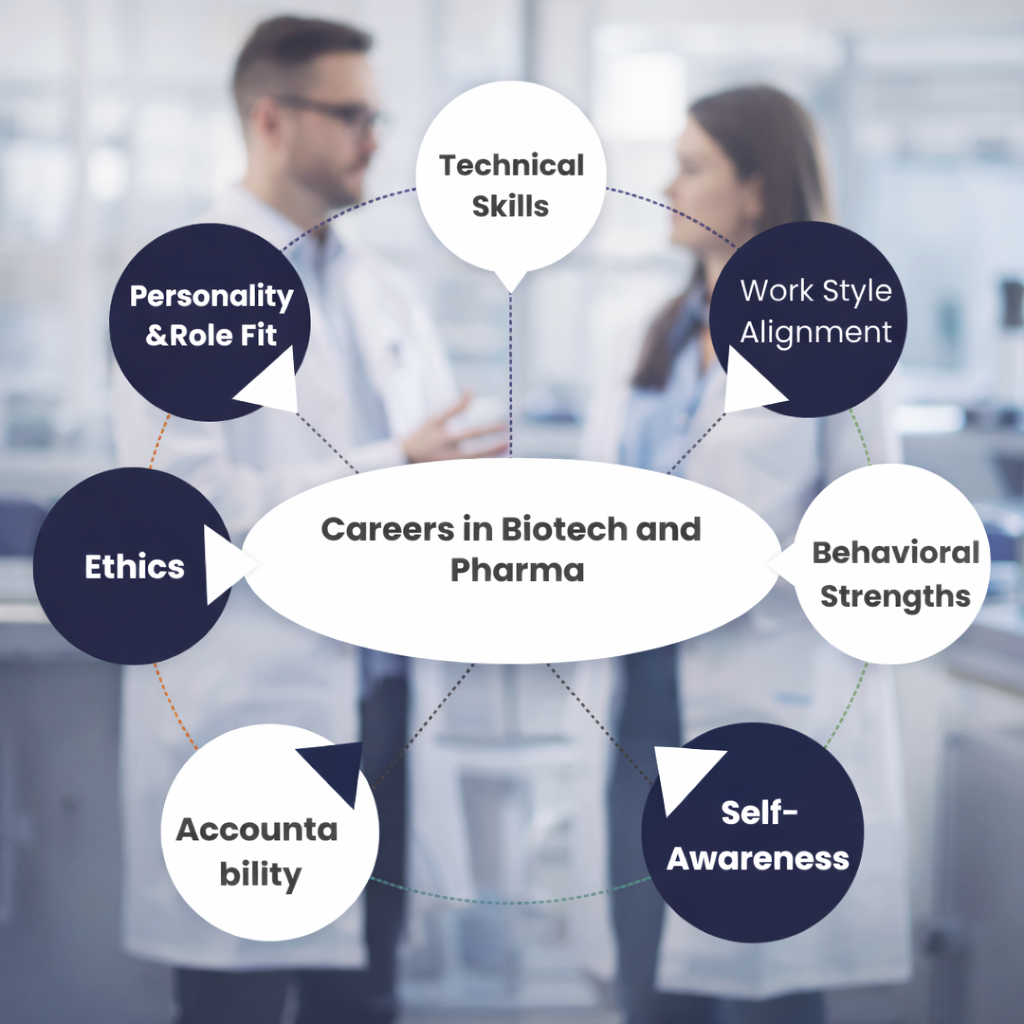
Choosing a career in the pharmaceutical or biotechnology industry requires much more than academic degrees or technical expertise. Over my twenty-year career in life sciences, I have discovered that long-term success and professional fulfilment depend as much on personality, work preferences, and behaviours as on technical knowledge. In highly regulated environments, whether in quality, regulatory affairs, clinical, or operations, decisions have real consequences for patient safety and organizational credibility. It is therefore important to align personality, work style, and professional responsibilities.
My journey has taken me from postdoctoral research to clinical laboratories, quality control, regulatory affairs, CMC compliance, and finally to founding a recruitment agency dedicated to professionals in pharmaceuticals, biotechnology, cosmetics, and the food industry. Each stage brought its own challenges and lessons, but above all, it allowed me to identify the environments and types of assignments in which I felt most engaged and effective.
From my early years in regulatory affairs, I began noticing recurring patterns in how professionals approached complex issues. I observed that two colleagues with identical training could react very differently to the same regulatory challenge. One might thrive under pressure, apply procedures rigorously, and identify potential risks, while the other, equally technically competent, might be unsettled by ambiguity or the high stakes of decisions. Observing these situations made it clear that success depended less on technical knowledge than on the ability to navigate uncertainty, manage competing priorities, and act with ethical clarity under pressure.
Why understanding your Personality and work style is essential for career success
Personality and work approach act as multipliers of effectiveness… or risk. In regulated pharmaceutical, biotechnology, cosmetic, and food environments, systems and procedures provide a framework, but it is individuals who give them meaning. Understanding how your natural tendencies and professional behaviours interact with your responsibilities allows you to identify roles where you can thrive, contribute meaningfully, and maintain lasting satisfaction.
For example, Clinical Research Associates (CRA) often succeed when they are meticulous, resilient, and highly organized, with a method of working that allows them to manage multiple clinical research sites or Contract Research Organizations (CROs), communicate clearly, and maintain compliance under strict deadlines.
- Regulatory affairs professionals benefit from strong conscientiousness, ethical rigor, and a structured, methodical work style, allowing them to interpret complex regulations and effectively guide cross-functional teams.
- Bioprocess engineers, analytical scientists, and solution-oriented creative professionals excel when their work approach supports systematic problem-solving and continuous process optimization.
- Chemists, whether in analytical, medicinal chemistry, or process chemistry, thrive when methodical thinking is combined with a precise, quality-focused approach in daily work.
- Qualified Persons (QP) succeed when ethical judgment, analytical thinking, and decision-making skills are paired with a disciplined and responsible work approach, ensuring regulatory compliance and constant protection of patient safety.
- Quality assurance specialists excel when meticulous attention to detail is combined with a stable, questioning mindset conducive to continuous improvement and compliance.
Even commercial or business development roles in pharmaceutical, cosmetic, or food sectors require a different combination of personality traits and work styles. Persuasive, empathetic, and socially agile professionals achieve better results when their behaviour fosters relationship-building, adaptability, and clear communication. Identifying these patterns helps everyone select roles where impact is maximized, unnecessary stress is reduced, and professional growth is facilitated.
By better understanding our personality and work style, and observing how challenges are approached across functions, we can move toward positions aligned with our strengths and capable of supporting effective performance in complex, high-stakes environments like pharmaceuticals, biotechnology, and the cosmetic and food sectors.
Discovering your personality and work style through HEXACO and DISC
Personally, I have found frameworks like HEXACO and DISC extremely valuable in turning these reflections into concrete career decisions. These tools have helped me identify the roles and environments in which I am naturally most effective, as well as assess team dynamics and support others in achieving better professional alignment.
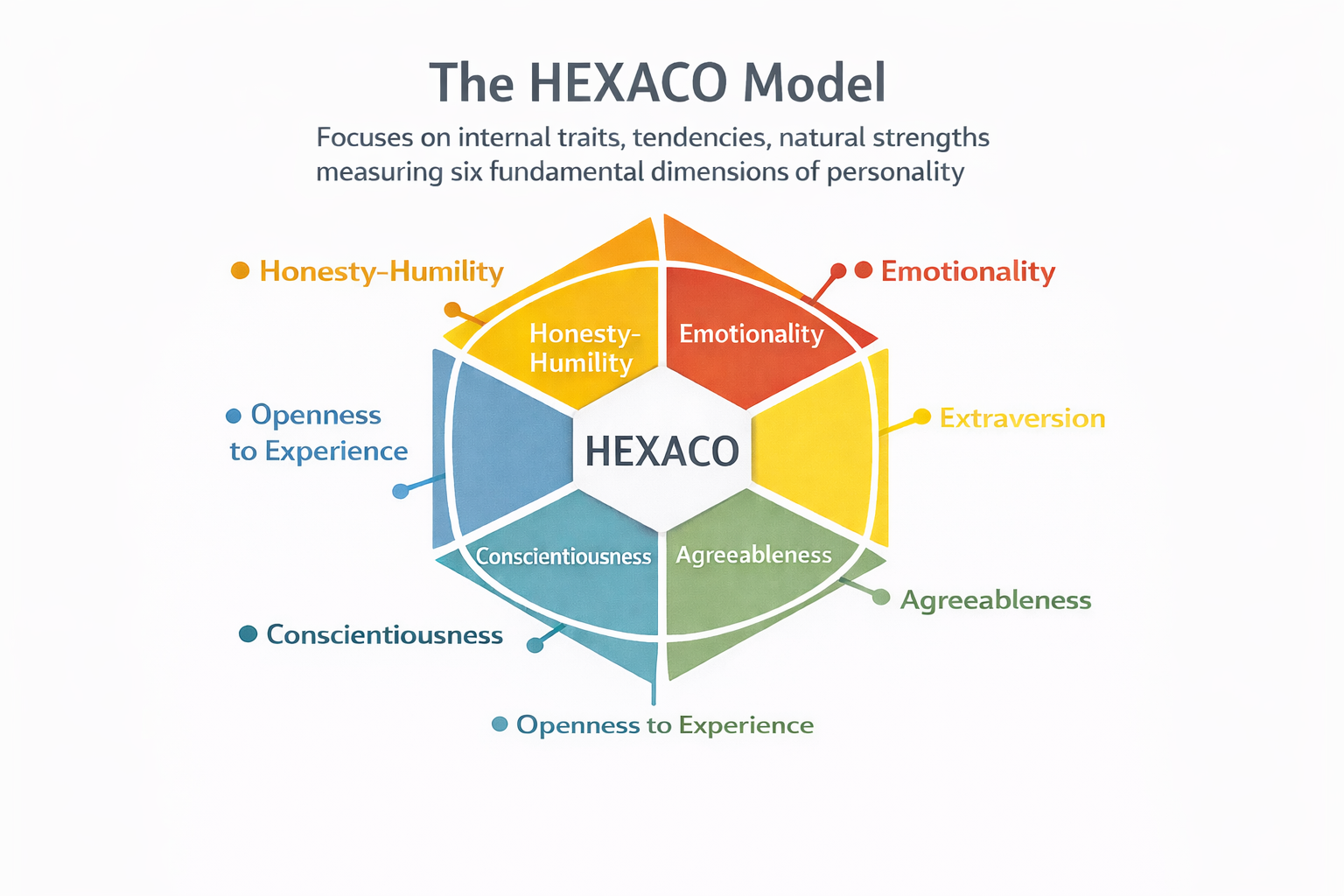
The HEXACO model focus on internal traits, tendencies, natural strengths measuring 6 fundamental dimensions of personality
- Honesty-Humility
- Emotionality
- Extraversion
- Agreeableness
- Conscientiousness
- Openness to Experience
It provides a comprehensive view of how you think and feel in different contexts. Understanding these traits allows you to better identify your natural strengths, decision-making style, stress response, and relational tendencies. In regulated, collaborative environments such as biotechnology, pharmaceutical, cosmetic, or food industries, this self-awareness supports professional development, effective teamwork, and the ability to manage complex situations with integrity and adaptability.
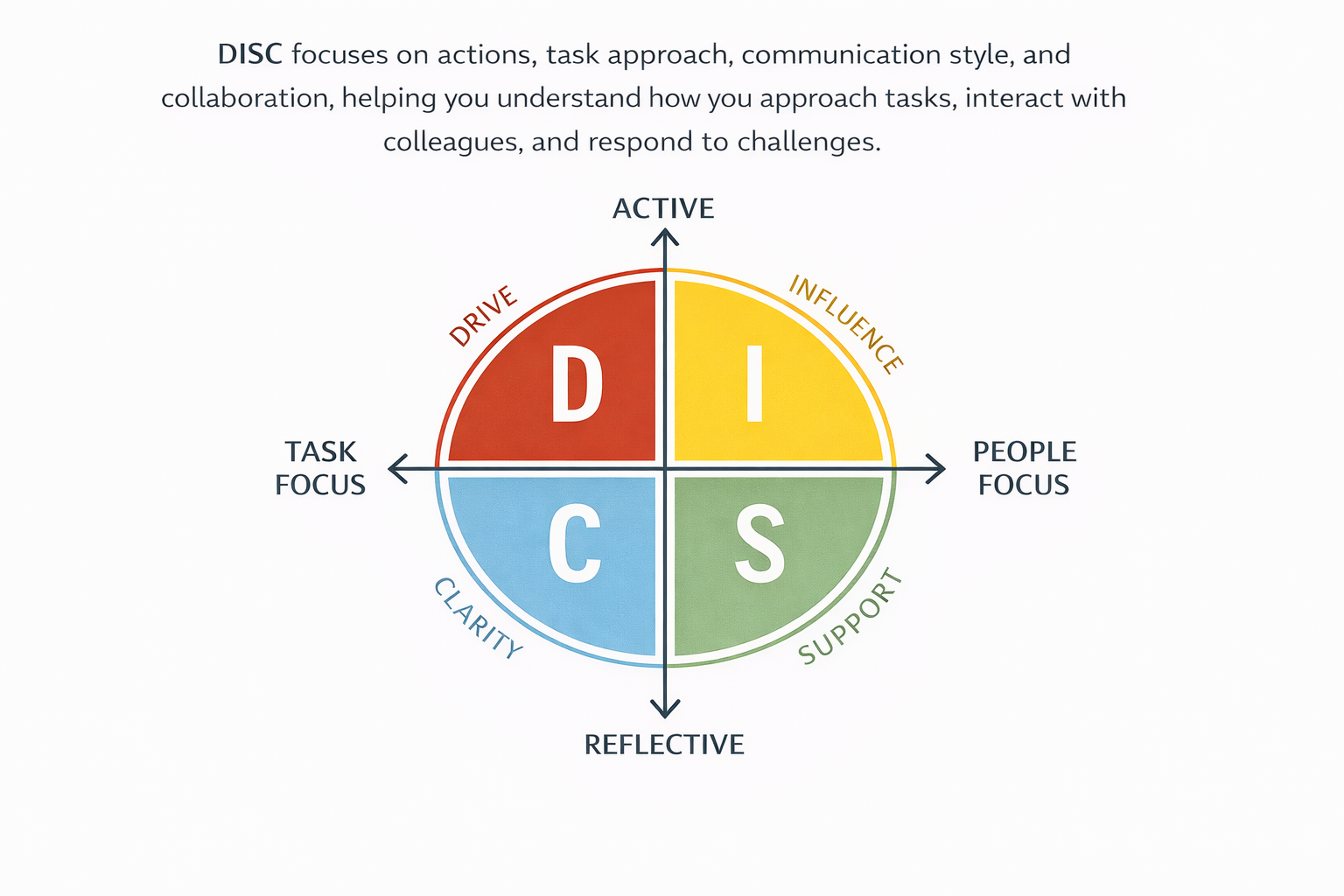
DISC focus on actions, task approach, communication style, collaboration helping to understand how you approach tasks, interact with colleagues, and respond to challenges.
The model identifies four main styles
- Drive
- Influence
- Support
- Conscientiousness (Clarity)
Each corresponds to a specific approach to work and collaboration. Most individuals exhibit a combination of these styles, which can evolve depending on context and role. In pharmaceutical, biotechnology, cosmetic, and food sectors, DISC is particularly useful for improving communication, cooperation, and productivity while showing how natural behaviours complement technical expertise.
Used alongside a personality model like HEXACO, DISC aligns professional behaviours with individual strengths and team needs, enhancing personal performance and organizational impact. You gain a deep understanding of both your core personality traits and habitual professional behaviours. This knowledge helps identify roles whose demands match your natural tendencies, collaborate more effectively, and succeed in complex, high-responsibility environments.
Building a career aligned with your personality
Throughout my career, I have observed how understanding one’s personality and work style can make a real difference. Professionals whose roles align with their personality are not only more effective but also more engaged and satisfied. This alignment reduces friction, improves collaboration, and ensures high-stakes decisions are made with integrity and rigor.
If you want to thrive professionally, don’t wait for the perfect opportunity to appear. Take the time to understand yourself.
Use tools like HEXACO and DISC to identify your natural strengths, recognize the functions in which you can excel, and identify environments that support your best work. Experiment, observe, and reflect on what energizes you. The clearer you are about your own tendencies, the better equipped you will be to pursue high-impact positions and help others do the same.
Start today. Take the assessments, analyse your results, and take the first step toward a career that truly fits you, a career where your strengths allow you not only to thrive but also to create real value for your team and organization.
Learn more about HEXACO – Take a free HEXACO test to understand the fundamental dimensions of personality
https://hexaco-personality-test.com
Learn more about DISC – Take a free DISC test to understand workplace behaviour styles
https://www.truity.com/test/disc-personality-test
FAQ
How do I choose a pharmaceutical career suited to my personality?
Choosing a pharmaceutical career suited to your personality requires analysing dominant traits, response to stress, rigor, and decision-making style. Regulated environments demand alignment between responsibilities, personal values, and work style. By identifying your natural strengths, it becomes easier to pursue roles where performance and fulfilments are sustainable.
Why is personality as important as technical skills in biotechnology?
In biotechnology, technical skills are essential, but personality determines how a professional manages uncertainty, collaboration, and regulatory constraints. A personality aligned with the role reduces errors, improves decision-making, and strengthens long-term contributions in high-stakes environments.
Which personality profiles succeed best in regulatory affairs?
Regulatory affairs professionals generally succeed when they have strong conscientiousness, a developed ethical sense, high analytical ability, and a structured work style. Tolerance for pressure, clear decision-making, and comfort with complex rules are also key success factors.
What type of personality is best suited for pharmaceutical quality roles?
Quality assurance and quality control roles are particularly suited to meticulous, stable, and detail-oriented profiles. A cautious, rigorous personality capable of questioning existing processes promotes regulatory compliance and continuous improvement.
How do I know if a clinical or clinical research role suits me?
A clinical research role often suits organized, resilient individuals capable of managing multiple priorities simultaneously. If you are comfortable with cross-functional communication, strict procedural follow-up, and tight deadlines, this type of career may match your work style.
Are personality tools like HEXACO and DISC useful for career guidance?
Yes, personality tools like HEXACO and DISC are particularly useful for career guidance in pharmaceuticals and biotechnology. They help better understand core traits and professional behaviors, facilitating the choice of roles aligned with natural strengths and job requirements.
Can I change roles within the pharmaceutical industry without changing domains?
Absolutely. Many professionals move between research, quality, regulatory affairs, or operations without leaving the industry. Better understanding your personality and work style helps identify coherent transitions and succeed in internal career moves.
How can I reduce professional stress in a regulated pharmaceutical environment?
Stress reduction comes from better alignment between role and personality. When responsibilities match an individual’s natural tendencies, mental load decreases, decision-making becomes smoother, and performance improves, even in high-responsibility contexts.