Developing your personal brand in the biotech and chemical sectors
The new standards of scientific credibility in a connected professional world

The modern industrial landscape is experiencing a significant shift in how professional authority is recognized and rewarded. For decades, scientists, researchers, and engineers within the biotechnology and chemical manufacturing sectors worked within a closed ecosystem. Professional success was measured almost entirely through traditional metrics, specifically peer-reviewed publications, patent portfolios, and operational safety records.
A new era of digital connectivity has changed this dynamic. The widespread adoption of professional networking platforms and data-driven executive search tools has redefined talent acquisition. In this environment, high-performing candidates take an active role in their industries by positioning themselves as industry experts. These individuals share insights and methodologies publicly, creating a distinct professional presence that draws the attention of premier employers.
Simultaneously, global enterprises utilize digital tracking and sourcing technologies to identify visionary leaders. Companies search for experts capable of managing substantial research investments, implementing sustainable manufacturing operations, or steering international regulatory campaigns.
Developing a professional brand within a technical framework requires translating deep domain knowledge, problem-solving strategies, and market awareness into a clear, accessible public profile. Experts specializing in advanced medicine delivery systems and sustainable supply chain engineering find that a well-defined public presence directly influences career mobility, access to investment capital, and standing within the global scientific community.
Communicating scientific expertise to recruiters, investors, and industry leaders
Building a professional presence in industries such as biotechnology, pharmaceuticals, advanced materials, or green chemistry requires a specific type of communication. Scientific expertise alone is rarely sufficient if it remains confined to highly technical discussions that only specialists can understand.
Professionals who stand out in these industries know how to make complex science understandable and relevant beyond the laboratory environment. Their communication connects technical knowledge to operational, industrial, regulatory, and commercial realities.
Scientific communication becomes significantly more impactful when technical concepts are directly linked to measurable consequences. Discussions about the thermodynamic stability of a bio-based polymer, the performance of a high-throughput screening platform, or the optimization of enzymatic degradation pathways gain far more relevance when connected to manufacturing scalability, reduced operational costs, accelerated development timelines, or improved industrial deployment.
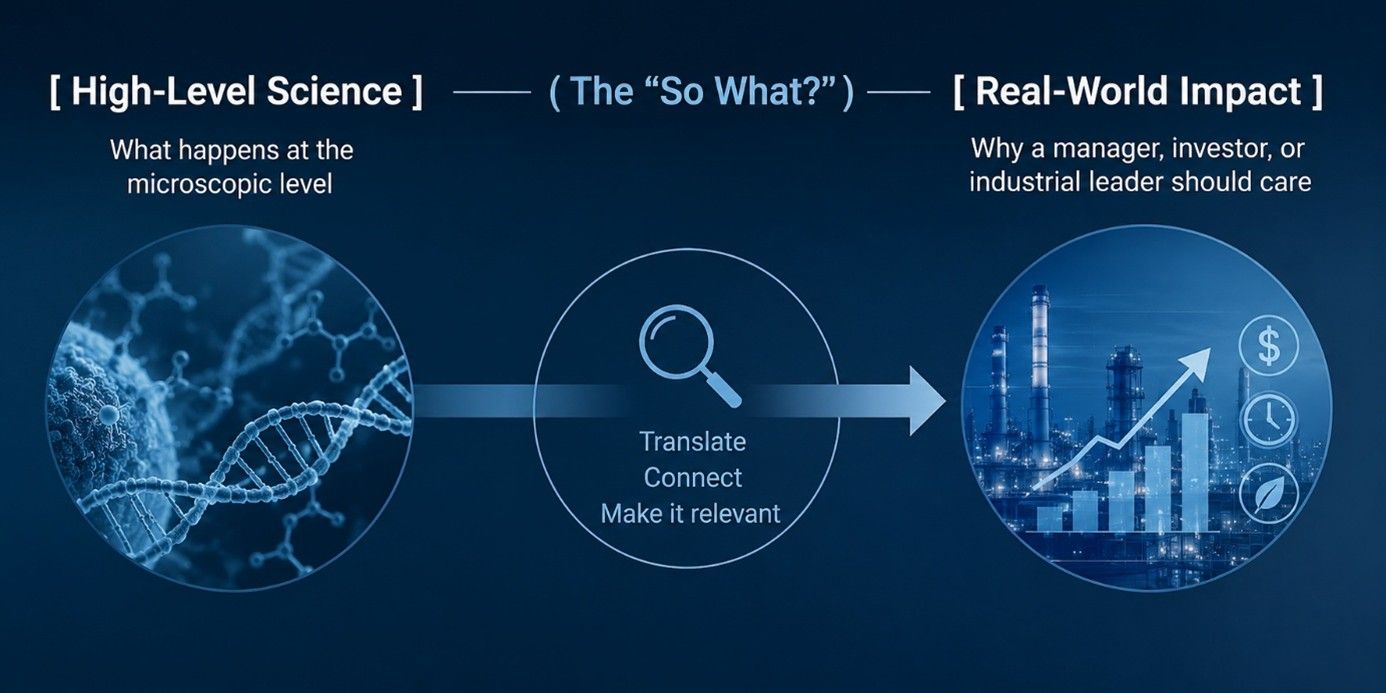
This ability to connect scientific detail with industrial implications strengthens professional credibility across multiple audiences simultaneously, including scientists, executives, investors, regulatory professionals, and manufacturing leaders.
In biotechnology and chemistry, the most respected professionals are often those capable of translating highly specialized expertise into broader industrial understanding. Their communication demonstrates technical rigor while remaining accessible enough to support strategic discussions around investment, scalability, manufacturing, sustainability, or regulatory positioning.
For example, discussing the molecular structure of a newly engineered enzyme becomes more valuable when accompanied by a clear explanation of how that innovation improves manufacturing throughput, reduces degradation time, lowers production costs, or supports industrial scale-up.
Similarly, explaining a regulatory bottleneck in clinical development becomes significantly more meaningful when connected to its impact on timelines, financial exposure, or the valuation of a therapeutic pipeline.
Several well-known scientific and industrial leaders have built strong professional influence through this ability to connect advanced science with real-world industrial relevance. Figures such as Bruce Booth became influential by translating complex biotechnology concepts into strategic discussions around investment, scalability, therapeutic pipelines, and company development. Others, such as J. Craig Venter, helped transform highly advanced scientific fields into broader industrial and commercial visions capable of influencing entire sectors.
Professional visibility in scientific industries increasingly depends on this capacity to connect scientific mechanisms to real-world industrial outcomes. Communication that consistently demonstrates this connection positions scientists and engineers as professionals capable of contributing beyond technical execution alone.
Within modern biotech and industrial environments, scientific credibility is increasingly associated with the ability to make advanced expertise understandable, applicable, and strategically relevant across different levels of the organization and the industry itself.
How to build your personal brand?
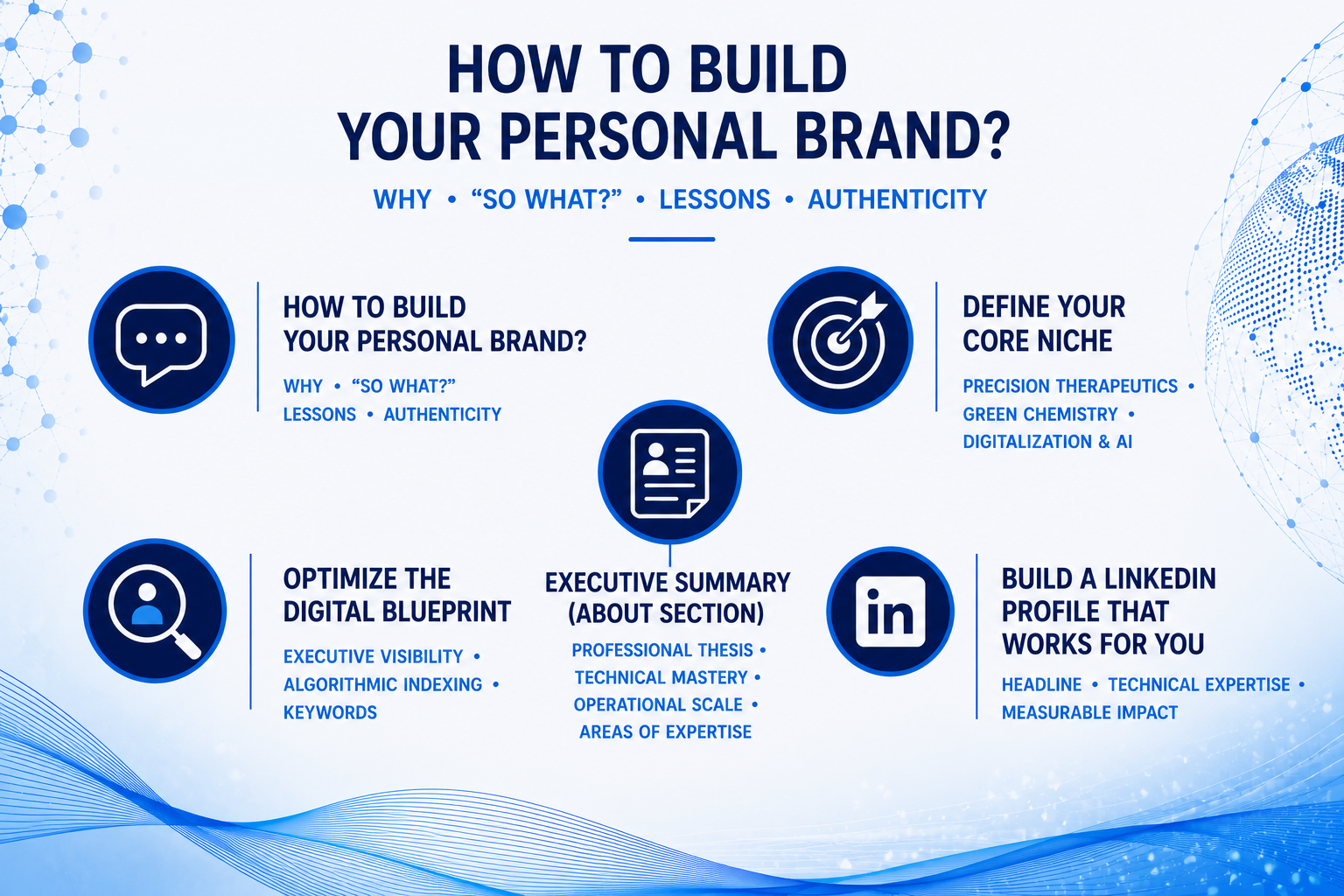
If you want to build a brand that actually lands you job offers and executive attention, start doing these three things:
- Talk About the "Why" and the "So What?": When you talk about your work, never just state a dry technical fact. Always tie it to a real-world result. Don't just say, "I optimized our continuous-flow synthesis loop." Instead, say, "We fixed a bottleneck in our production line. By changing how we managed the temperature, we sped up production by 40% without spending extra money."
- Share Your Lessons from Mistakes (The "Post-Mortem"): People connect with humans, not perfect robots. The highest-engaging content on LinkedIn isn't a victory lap; it’s a breakdown of a problem you solved. Write about a time a batch failed, a lab test went wrong, or a scaling process hit a wall. Explain what went wrong, how you diagnosed it, and what you learned. This shows recruiters real resilience.
- Write Like You Speak: Before you hit publish, read your text out loud. If you wouldn't say those exact words to a colleague over coffee, rewrite them. Replace words like "utilize" with "use", and "leveraging synergistic platforms" with "working together."
Define your core niche
The biotech and chemical sectors are far too vast for a generalized personal brand.
To stand out, choose one specific problem or area to focus on, build your brand around one of these high-growth sectors:
- Precision therapeutics & biologics: Focus on high-impact areas like synthetic lethality, multiomics sequencing, or G-protein-coupled receptor (GPCR) targeting.
- Sustainable and green chemistry: Position yourself at the forefront of carbon-capture utilization, bio-based feedstocks, or biodegradable polymer synthesis.
- Digitalization and ai-driven discovery: Analise the intersection of machine learning, automated high-throughput screening, and predictive chemical informatics.
Optimizing the digital blueprint for executive visibility
Global executive search firms and internal talent acquisition teams at market-leading organizations rely on highly specific, keyword-driven algorithmic indexing to source top candidates. If your digital profiles lack structural optimization, your expertise remains functionally invisible.
Positioning your scientific expertise on LinkedIn
LinkedIn functions as the primary search engine for executive and scientific talent. Optimizing this touchpoint requires a calculated approach to key profile sections:
- The Title and Headline Strategy
Abandon generic titles like "Senior Scientist at Biogen" or "Project Manager at Dow." Your headline should serve as a value proposition that integrates your core function, your technical specialty, and the scale of your business impact. Use this structural formula:
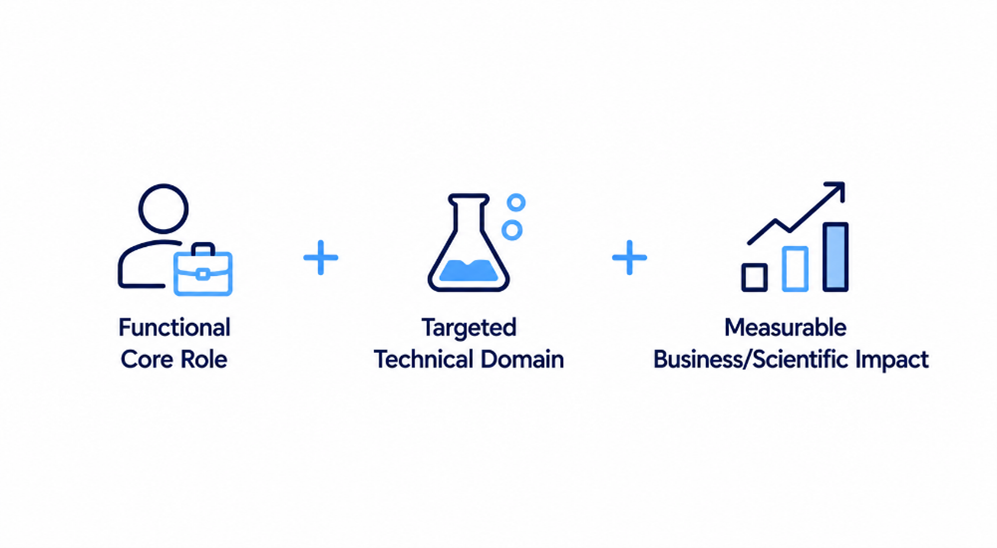
Example (Biotech): "Director of Biologics Discovery | Specializing in Targeted Protein Degradation & Chromatin Biology | Accelerating Early-Stage Oncology Pipelines from Concept to Phase I"
Example (Chemical): "Head of Polyurethane Process Engineering | Industrial Scaling & Continuous Flow Synthesis | Reducing Carbon Footprints for Global Automotive Materials Infrastructure"
- The executive summary (about section)
Your summary should read like an executive briefing, not a historical narrative. Lead with your overarching professional thesis—what structural problem in biotech or chemical engineering are you dedicated to solving?
Structure the body into clear, bulleted thematic clusters: Technical Mastery, Operational Scale, and Commercial Milestones. Conclude with an explicitly defined "Areas of Expertise" keyword block containing dense industry terminology (e.g., cGMP compliance, CRISPR gene editing, downstream processing, mass spectrometry) to satisfy algorithmic indexing filters.
How to build a powerful digital portfolio
For professionals in R&D and engineering, static text descriptions are insufficient. Where non-disclosure agreements (NDAs) and intellectual property boundaries permit, construct a digital portfolio that highlights your structural problem-solving capabilities.
If your core patents or internal project data are proprietary, build public case studies around open-source industry challenges. Deconstruct how a hypothetical production facility could optimize its petrochemical cracking units to transition toward renewable bio-ethylene, outlining the exact mass balances, thermodynamic considerations, and capital expenditure calculations required for execution.
Your content plan: translating science into engagement
To maintain a compelling personal brand, you must execute a predictable, high-value content strategy. This strategy should position you as a real-time interpreter of industry shifts, complex regulatory mandates, and disruptive macroeconomic factors.
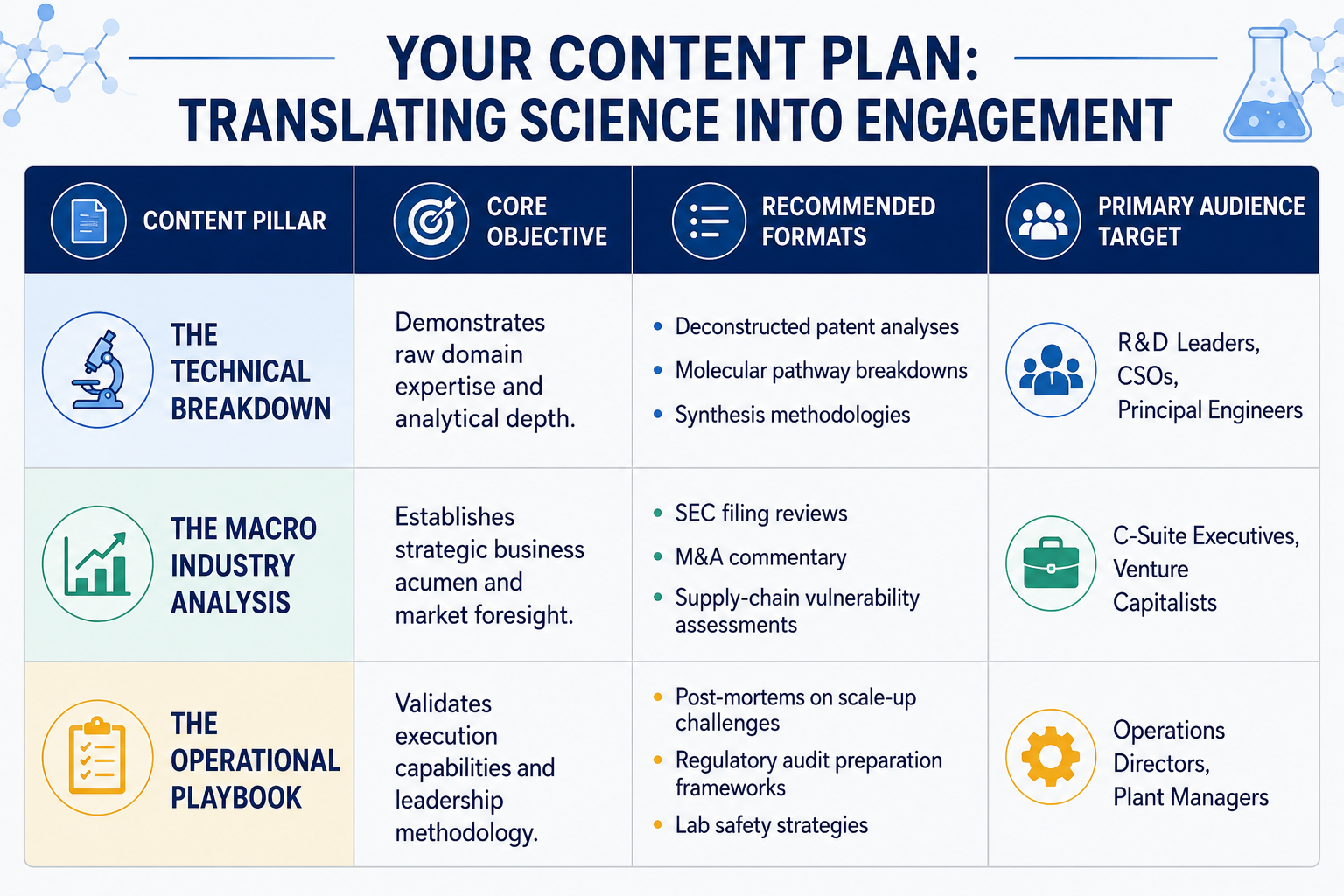
Creating high-value, detailed posts
Building high visibility requires an intentional publishing cadence. Select a frequency you can consistently sustain, such as a bi-weekly long-form technical article combined with bi-weekly short-form market insights. When a major industry milestone occurs, such as the FDA clearance of an expanded clinical trial or the announcement of a multi-billion-dollar joint venture in green hydrogen production, do not merely share the news link.
Author a comprehensive breakdown detailing the downstream implications. Analyze how the event alters capital allocation trends across the sector, impacts the talent market for specialized analytical chemists, or shifts the regulatory benchmarks for competing organizations.
Aligning your content with big biotech trends
To maximize your brand's authority, you must deliberately associate your digital footprint with the enterprise-level organizations that dictate the pace of modern biotechnology. Aligning your insights with the strategic directions of industry giants establishes your relevance to both institutional peers and premier talent.
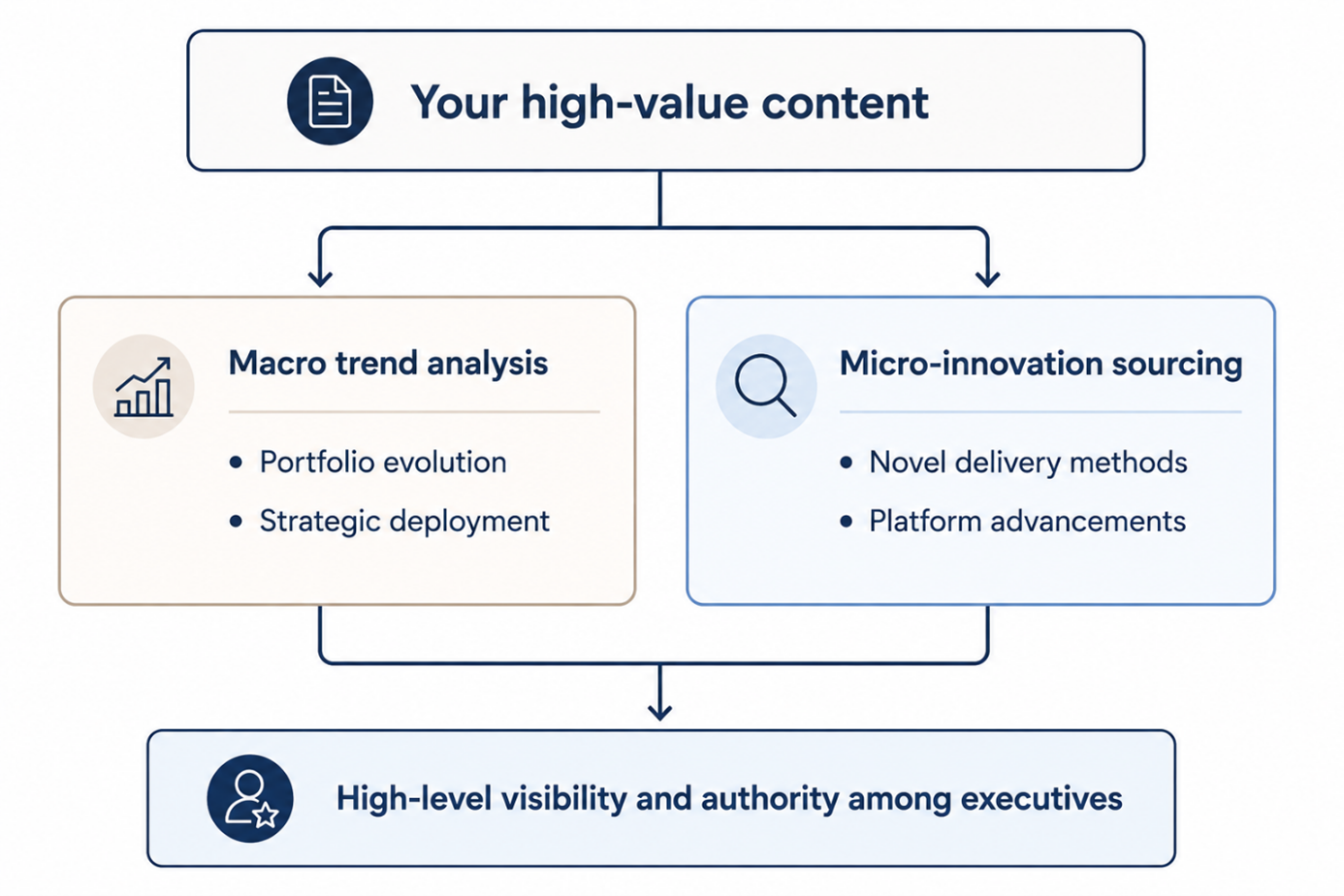
Understanding big trends in biopharma and therapeutics
When engaging with the biopharmaceutical space, your content should reflect a sophisticated understanding of pipeline development, commercial execution, and technological integration. Aligning your commentary with the focus areas of market leaders demonstrates that you operate at the absolute cutting edge of the discipline:
- Commercial scale and pipeline execution: analyse how market leaders like Eli Lilly manage the massive manufacturing, global distribution, and clinical development scaling required for therapeutic innovations in metabolic health and oncology.
- Immunology and targeted interventions: Focus on how organizations such as Merck and Johnson & Johnson systematically navigate complex regulatory environments and clinical trial frameworks to bring life-saving immunotherapies and receptor-targeted treatments to market.
- Next-generation therapeutics platforms: Position your brand around advanced therapeutic modalities by analysing how pioneers like Moderna and BioNTech push the boundaries of programmable mRNA medicines, personalized cancer vaccines, and real-time cellular logic circuits.
Connecting with leaders in diagnostics and lab tools
Biotech thought leadership covers more than medicine. The lab tools, software, and equipment that power scientific discovery make up a massive sector where your technical expertise is highly valued.
- Advanced lab tools and dna sequencing: Author technical deep dives into how structural toolmakers like Thermo Fisher Scientific and Element Biosciences are revolutionizing multiomics sequencing and proteomics, radically accelerating early-stage target identification.
- Precision cancer testing and diagnostics: Examine how molecular diagnostics leaders like Exact Sciences design, validate, and scale non-invasive screening technologies, transforming oncology from a reactive treatment model to an early-detection paradigm.
Positione yourself near innovation in chemicals and materials
Chemical and materials companies care most about smooth operations, reliable supply chains, and moving toward eco-friendly practices. Your personal brand needs to show that you understand these major industry goals.
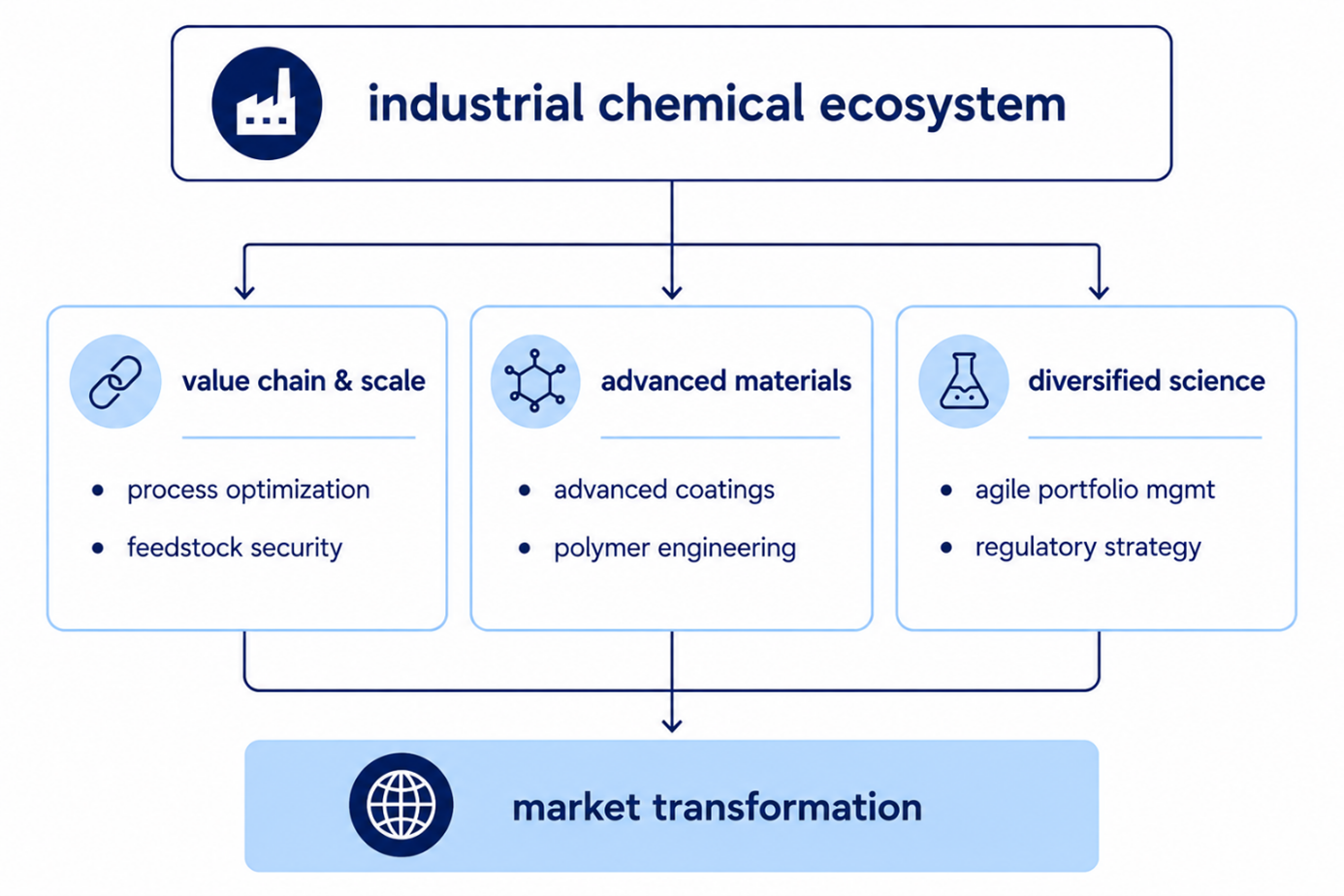
How to talk about massive oil, gas, and chemical projects
In the high-volume industrial chemical sector, success is defined by process optimization, energy efficiency, and feedstock security. Candidates looking to lead heavy industrial operations should structure their commentary around the strategic initiatives of the world’s largest producers:
- Global infrastructure and market leadership: Align your operational insights with the strategies of undisputed market titans like BASF and Dow, focusing on how these conglomerates optimize large-scale upstream manufacturing and weather complex global petrochemical cycles.
- Feedstock advantage and regional production hubs: Deconstruct how mega-producers like SABIC leverage unique regional feedstock advantages and deep down-stream manufacturing integration to maintain global price competitiveness amidst structural market pressures.
Building your brand around specialty materials and coatings
If your expertise lies in high-value specialty chemistry, polymer science, or surface modification, your personal brand should target the fast-evolving sectors of protective materials, electronics, and automotive coatings:
- Specialty applications and advanced coatings: Focus your technical breakdowns on how specialized innovators like Sherwin-Williams and PPG engineer high-performance paints, protective coatings, and industrial surfaces tailored for extreme environmental durability.
- Diversified science and high-tech materials integration: Connect your insights to the strategies of diversified materials enterprises like DuPont and Huntsman, demonstrating an understanding of how advanced polyurethane chemistry, electronics materials, and specialty polymers are integrated into next-generation semiconductors, 5G networks, and autonomous vehicle platforms.
Your strategy for professional networking
An online brand requires a real-world networking plan to turn your digital visibility into actual career opportunities. Actively contributing to the industry's most influential forums allows you to maximize your professional impact.
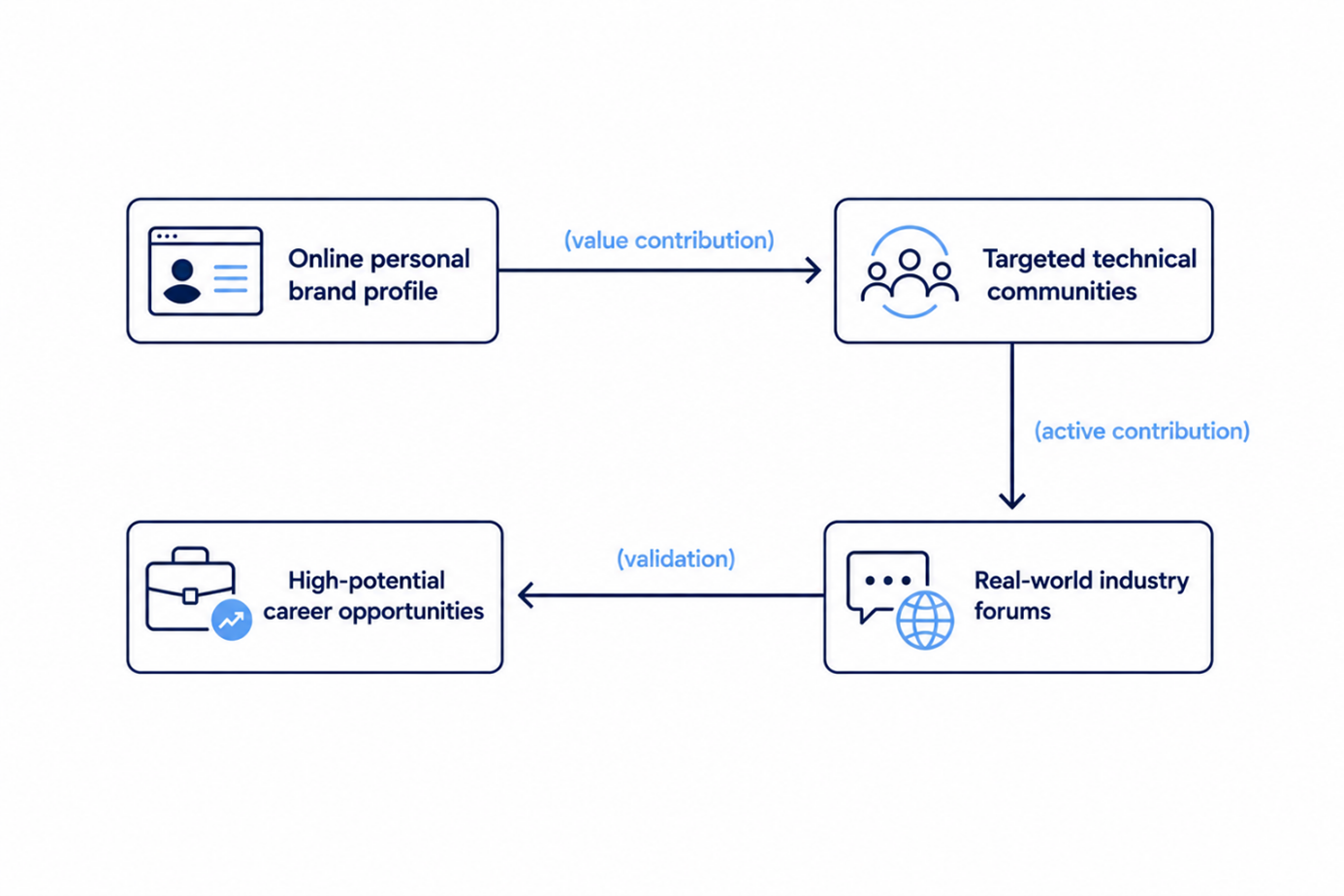
Building executive relationships
Sharing valuable insights is an excellent way to connect with industry leaders and top talent. A great place to start is by following the top 50 experts, executives, and researchers in your specific field.
Following a weekly routine to read and reply to their posts helps build consistent visibility. High-quality comments work best. Adding data, sharing a different perspective from your own experience, or asking an advanced question helps move the professional conversation forward.
- Getting the most out of major industry events
Attending global events like major medical or chemical manufacturing conferences offers a perfect opportunity to share your expertise. Planning your approach a few weeks early helps maximize your impact.
- Pre-conference preparation
Reviewing the speaker schedule and presentation summaries helps you find topics that match your background. Sharing a quick preview about the specific data, clinical results, or new technologies you are watching gives your network a helpful guide on why these updates matter.
- Real-time updates
Focusing on clear, technical summaries during the event keeps your updates highly relevant. You can explain the main points of a new announcement or summarize a panel discussion on topics like green hydrogen to give your network quick, actionable takeaways.
- Post-event summaries
Writing a clear summary of the major trends and shifts after the event provides a useful resource for your peers. Sharing this overview with colleagues, industry connections, and hiring teams highlights your deep understanding of the market.
Share your expertise safely within regulatory limits
Building a prominent personal brand in deep tech, pharma, or chemical manufacturing is highly rewarding, but it does come with unique professional risks. Because these fields rely so heavily on trade secrets, patents, and strict regulations, taking a careful and thoughtful approach to communication helps protect your career and your employer from legal liabilities.
Protecting intellectual property
An easy way to stay safe is keeping a clear boundary between public commentary and your employer's internal R&D data. Here are a few practical strategies to guide your content creation:
- Focus on the public domain: It is best to avoid referencing internal pipeline progress, unpublished clinical outcomes, secret chemical formulas, or pending patents unless your organization’s legal and communications teams have explicitly cleared them for public release.
- Use the concept abstraction method: If you want to discuss a day-to-day work challenge or scientific concept, try pulling the core problem away from your company’s specific project. You can frame the discussion around universal scientific principles, public academic literature, or well-known industry case studies.
- Add a standard disclaimer: Placing a clear note on your digital profiles and longer articles explaining that all thoughts, analyses, and opinions are strictly your own—and do not represent your employer, is an excellent industry best practice.
Staying within regulatory frameworks
Biotech and chemical professionals operate under the steady watch of agencies like the FDA, EMA, and EPA. Since unverified claims about drug efficacy or environmental safety can cause serious issues, keeping your public presence disciplined and fact-driven works best.
- Anchor your content in facts: When commenting on clinical trials, safety stats, or environmental impacts, anchoring your points to verified documentation—like peer-reviewed studies or official regulatory guidance, keeps your commentary highly credible.
- Avoid speculation: Steering clear of predictions regarding pending drug approvals, ongoing lawsuits, or unverified safety incidents helps protect your current organization. It also signals to future employers that you have the mature judgment needed for high-stakes leadership roles.
The long-term rewards of scientific branding
Developing an authoritative personal brand is a long-term investment that builds over time. It simply requires a steady commitment to translating complex science into useful market insights, keeping your profile visible, and connecting with peers around the world.
As you share valuable content and align your insights with market trends, your public profile shifts from a passive resume into an active career asset. For professionals, this visibility regularly brings in executive opportunities, venture capital connections, and collaborative invitations. For organizations, it highlights you as a leader who can attract exceptional talent to build the next generation of scientific breakthroughs.
Taking thoughtful control of your professional narrative ensures your technical mastery is fully recognized across the global scientific landscape.
Helpful Context
For a deeper look at the market conditions driving change across these sectors, you can watch this breakdown on the Chemical Industry Turnaround Trends
This video is an excellent resource, as it details how traditional chemical and materials giants are shifting their portfolios toward high-tech supply chains and advanced materials, giving you the perfect macroeconomic context to position your brand effectively.
How can I build a personal brand if all my work is under strict NDAs?
You don't need to share proprietary data or internal secrets to build an authoritative brand. Instead, focus on the underlying principles of your expertise. If you cannot talk about the specific oncology molecule you are developing, talk about the macro trends in targeted protein degradation or the regulatory hurdles currently facing Phase II clinical trials. Frame your content around publicly available case studies, newly published patents from other firms, or academic literature. This shows how you think and solve problems without ever breaching confidentiality.
Which platform should I focus on besides LinkedIn?
While LinkedIn is the undisputed hub for executive search and corporate visibility, a secondary platform depends heavily on your niche:
• Substack/Medium: Ideal if you specialize in deep technical writing, molecular breakdowns, or long-form chemical supply chain analyses.
• X (formerly Twitter): Excellent for real-time engagement within the academic and biotech VC communities (often referred to as "Biotech Twitter").
• ResearchGate: Crucial if your personal brand relies heavily on peer-reviewed academic citations, bench science validation, and raw R&D credibility.
How much time do I actually need to invest in this weekly?
A highly visible brand does not require a full-time marketing effort. Consistency matters far more than volume. A sustainable "minimum viable cadence" requires about 2 to 3 hours per week:
• 1.5 hours: Draft one high-quality, long-form post or deeply analyzed industry commentary.
• 45 minutes: Spread across the week (10 minutes a day) to leave 3–4 insightful, multi-paragraph comments on the posts of key industry leaders or companies.
• 15 minutes: Network maintenance (accepting connection requests, sending quick direct messages to peers).
Will my current employer think I’m looking for a new job if I start posting heavily?
This is a common fear, but it entirely depends on how you frame your content. If you suddenly start posting generic career updates, it looks like a job hunt. However, if you position yourself as a passionate advocate for your niche, it actually elevates your employer's brand. When you write intelligently about sustainable chemistry or advanced therapeutics, you make your current company look like a hub for top-tier talent. To keep internal stakeholders at ease, always include a disclaimer in your bio (e.g., "Opinions my own"), and occasionally highlight or celebrate your current team's public milestones.
How do I balance being authoritative without sounding arrogant?
True authority in scientific sectors comes from intellectual humility and data. Avoid using vague, self-aggrandizing buzzwords like "disruptor," "guru," or "visionary" in your headlines or posts. Instead, let your analysis do the heavy lifting. Cite your sources, link to peer-reviewed data, and openly invite discussion or differing viewpoints at the end of your posts (e.g., "How is your team navigating this optimization bottleneck? I’d love to hear alternative approaches in the comments."). Approaching content as a collaborative peer rather than an untouchable expert builds immediate trust.
How do I make my personal brand visible to AI-driven applicant tracking systems and executive search algorithms?
Modern executive search firms and major corporate talent acquisition teams rely heavily on AI engines to parse passive candidate profiles. To ensure your brand passes algorithmic indexing, your content and profile must feature a high density of hybrid skill terminology. The current market is aggressively tracking candidates who bridge the gap between traditional science and digital optimization. Ensure your profile systematically includes terms like:
• Chemical Informatics / Predictive Molecular Simulation
• Continuous Manufacturing Flow / Bioprocess Automation
• Generative AI Drug Discovery Pipelines
• Digital Twin Simulation (for chemical processing or plant scaling)
When publishing articles, explicitly name the advanced analytical tools, software platforms, and regulatory frameworks (e.g., cGMP, FDA/EMA multi-site compliance, High-Throughput Screening) relevant to your niche.
I am a top candidate looking to attract corporate venture capital (CVC) or startup boards. What should my content focus on?
If your branding objective is to attract investment or transition into an executive role within a venture-backed startup, your content strategy must pivot away from raw lab techniques and focus entirely on commercial viability and scaling bottlenecks. Venture capitalists and board members look for leaders who understand how to move an asset through the "valley of death" from discovery to market. Author content that breaks down:
• The Patent Cliff: analyse how upcoming exclusivity losses for major blockbuster drugs create strategic M&A urgency for large pharmaceutical corporations.
• CapEx Optimization: Detail how the integration of single-use bioreactors or AI-driven documentation assistants can compress Investigational New Drug (IND) submission timelines by 40–50%.
• Cross-Border Dynamics: Comment on global talent mobility, international clinical trial placement (such as the acceleration of oncology trials in emerging markets), and regulatory alignment across varying geographic jurisdictions.
What is the biggest branding mistake technical candidates make, and how do I avoid it?
The most prevalent error is failing to quantify results—often referred to as writing a "responsibilities-based narrative" rather than an "impact-based narrative." Top recruiters do not search for candidates who were simply "responsible for overseeing downstream purification." They search for leaders who "scaled a downstream purification pipeline, improving throughput optimization by 22%." Every time you share a professional milestone, a case study, or a strategic thought, apply this simple impact framework:
$$\text{[Technical Action/Methodology]} \longrightarrow \text{[Operational/Process Improvement]} \longrightarrow \text{[Measurable Financial/Strategic Value]}$$