
The six pillars of a fulfilling scientific career
How scientific professionals can assess opportunities with greater clarity
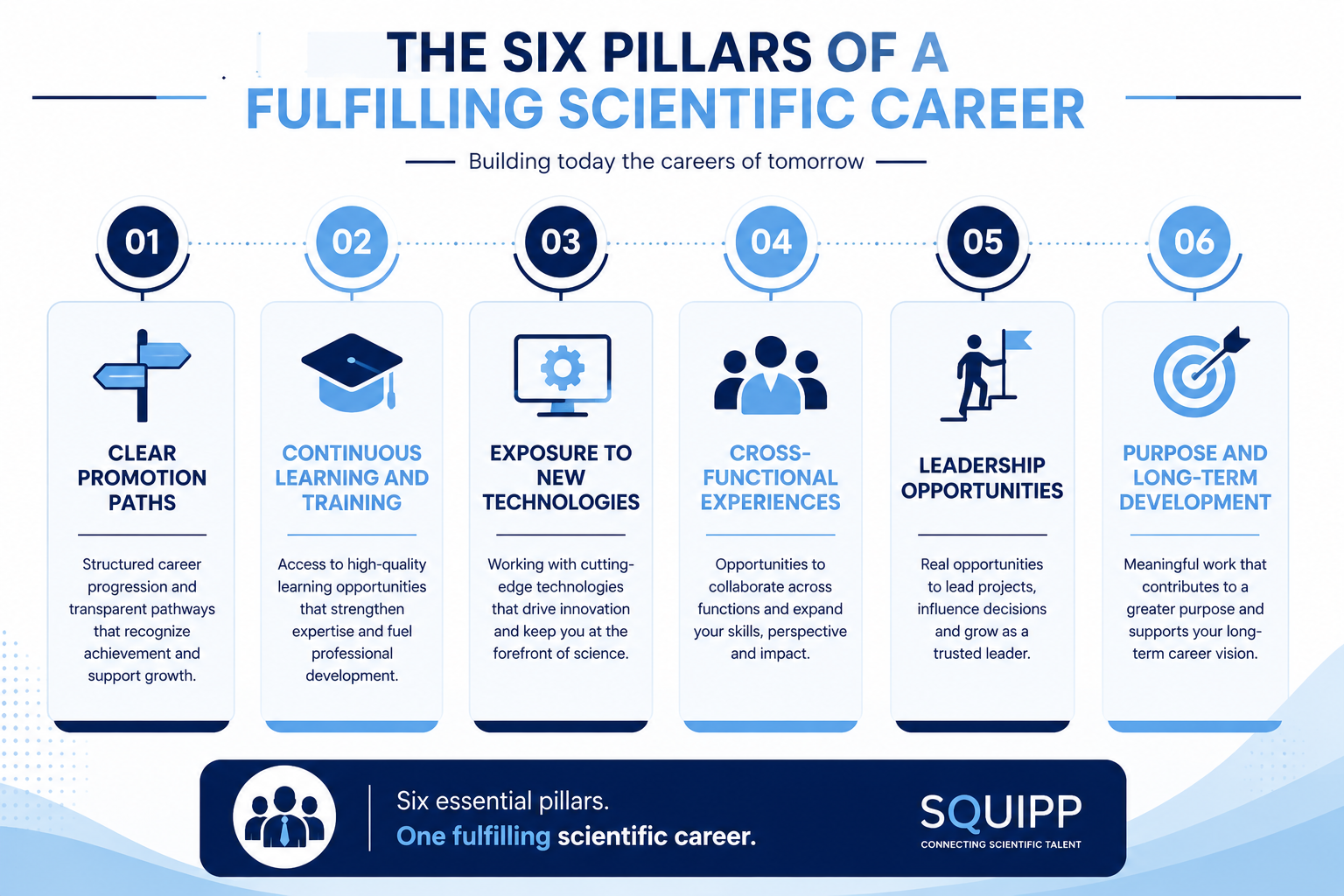
If you work in biotechnology, pharmaceuticals or chemicals, you have probably already realised that scientific careers rarely evolve through a perfectly linear sequence of promotions or predefined milestones. Professional journeys are often shaped by a combination of scientific challenges, unexpected opportunities, collaborations with inspiring colleagues and exposure to projects that progressively expand both technical expertise and professional ambitions.
Over time, a career becomes much more than a collection of job titles or years of experience. It becomes the story of the knowledge you have accumulated, the problems you have solved and the environments that have enabled you to grow as a scientist, an expert and, in many cases, a leader.
This journey is becoming increasingly complex. Scientific organisations are being transformed by digitalisation, artificial intelligence, advanced therapies, sustainability requirements and rapidly evolving regulatory expectations. New technologies are emerging at an unprecedented pace and disciplines that once operated independently are becoming increasingly interconnected. Biologists work alongside data scientists, quality professionals collaborate with digital specialists and process engineers contribute to strategic business decisions that extend far beyond manufacturing operations.
Evaluating a career opportunity can no longer be reduced to a discussion about compensation, job title or immediate responsibilities. While these factors remain important and should never be overlooked, they rarely determine whether a career will continue to be stimulating, rewarding and sustainable over the long term. The professionals who build the most fulfilling careers tend to ask themselves broader questions. They want to understand if a role will allow them to continue learning, whether it will expose them to emerging technologies, whether it will broaden their perspective and whether it will help them become the kind of expert or leader they aspire to be in the years ahead.
Throughout our discussions with hundreds of scientific professionals across biotechnology, pharmaceuticals and chemicals, we have observed that the most rewarding careers are often built around six interconnected pillars. These pillars provide a practical framework that allows professionals to look beyond the surface of a job description and evaluate opportunities with greater clarity, greater confidence and a stronger sense of purpose.
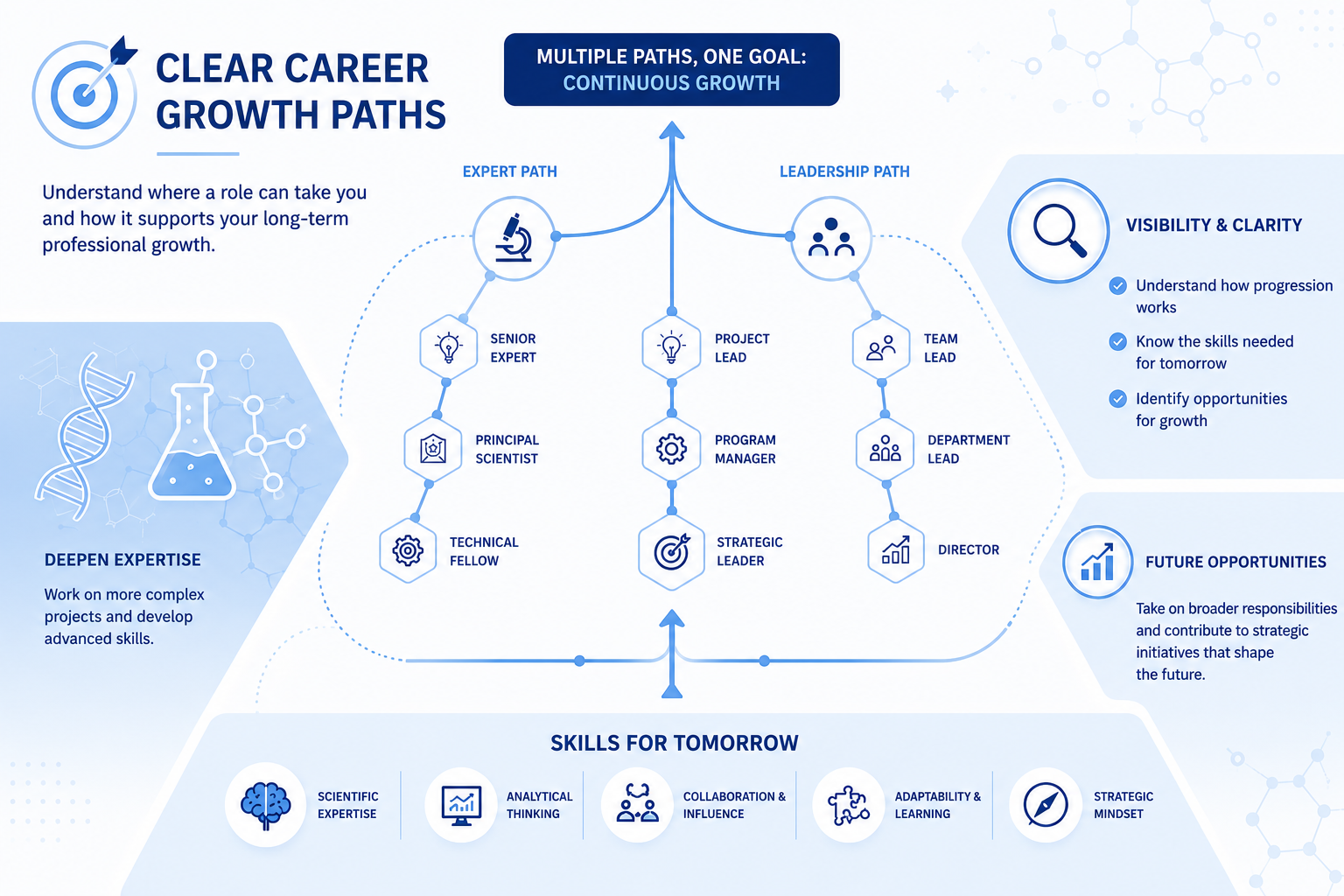
One of the questions that frequently emerges during discussions with scientific professionals concerns the future trajectory that an organisation can offer and the extent to which a particular environment can support the progressive development of expertise, responsibility and professional contribution over time.
Scientific careers develop through a long process of knowledge accumulation, exposure to increasingly complex scientific challenges and participation in projects that progressively broaden technical capabilities and deepen professional judgement. Every experience contributes to the construction of expertise and every new responsibility adds another dimension to a professional journey that continuously evolves throughout the different stages of a career.
A new position frequently represents an opportunity to acquire additional scientific knowledge, to develop new capabilities, to gain exposure to emerging technologies and to participate in projects that influence the future direction of scientific activities and organisational priorities. Career decisions therefore carry implications that extend over many years because each professional experience contributes to the development of future expertise, future opportunities and future influence.
Professional aspirations among scientists take many different forms and evolve progressively throughout a career. Some professionals seek to deepen their knowledge within highly specialised scientific disciplines and aspire to become recognised authorities in their field of expertise. Others seek to contribute to multidisciplinary programmes, participate in innovation initiatives, guide scientific decision-making processes or support the development of new technologies and scientific capabilities within their organisations. In every case, professional fulfilment is closely associated with the possibility of continuing to learn, continuing to grow and continuing to increase the value and significance of one's contribution.
The visibility of career pathways therefore represents an important component of long-term engagement and professional motivation. Scientific professionals seek a clear understanding of how expertise is recognised, how responsibilities evolve and how sustained contribution and continuous learning support future development. A transparent framework for career progression creates confidence, facilitates long-term planning and encourages individuals to invest in the continuous development of their capabilities.
Organisations that communicate clearly about development opportunities and that actively invest in scientific talent create environments in which professionals can project themselves into the future with confidence and purpose. They create conditions that encourage curiosity, strengthen engagement and support the continuous expansion of scientific expertise and professional influence.
Scientific careers unfold over decades and are shaped through the accumulation of experience, the gradual development of expertise and the continuous enrichment of perspective that accompanies exposure to increasingly sophisticated scientific and organisational environments. Professional fulfilment frequently emerges from the feeling that each project, each collaboration and each new responsibility contributes to a meaningful and coherent professional journey.
A strong scientific career is therefore supported by a clear sense of progression, by opportunities for continuous development and by the confidence that sustained effort, intellectual curiosity and scientific excellence will continue to open new possibilities for contribution, influence and professional achievement throughout an individual's career.
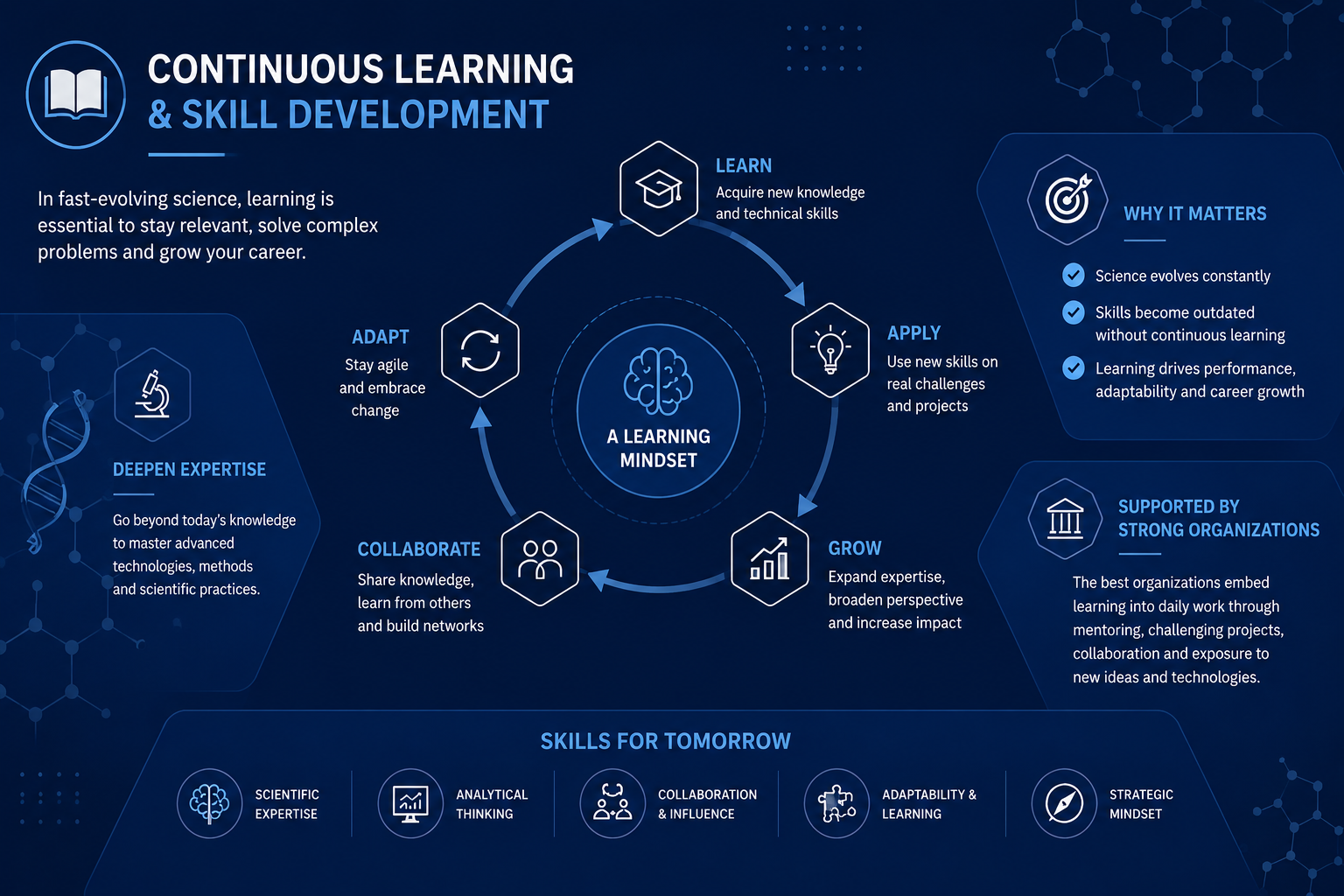
Few professions evolve as rapidly as those within biotechnology, pharmaceuticals and chemicals. Scientific knowledge expands continuously, new technologies emerge at an accelerating pace and regulatory expectations become increasingly sophisticated, creating an environment in which expertise can quickly become outdated if it is not actively maintained and developed. In this context, learning is no longer an activity that takes place only during formal training sessions or occasional conferences. It becomes an integral part of professional life and one of the most important determinants of long-term career success.
The scientific professionals who remain relevant and highly sought after throughout their careers are often those who cultivate a genuine learning mindset. They continuously seek opportunities to expand their technical knowledge, improve their understanding of adjacent disciplines and develop capabilities that allow them to adapt to new challenges. Their curiosity extends beyond their immediate area of expertise because they recognise that innovation frequently emerges at the intersection of different scientific fields.
Continuous learning also contributes significantly to professional fulfilment. Most individuals who choose scientific careers are naturally curious and derive satisfaction from solving complex problems, discovering new concepts and mastering increasingly sophisticated technologies. Working in an environment that actively encourages learning therefore has a profound impact not only on professional performance but also on motivation, engagement and long-term retention.
The strongest organisations understand that professional development cannot be left entirely to individual initiative. They create environments in which learning is embedded into everyday work through mentoring, challenging assignments, multidisciplinary projects, coaching and exposure to new ideas and technologies. For scientific professionals, these environments provide a powerful sense of momentum because they create the feeling that every project, every collaboration and every new responsibility contributes to a broader and more meaningful process of professional growth.
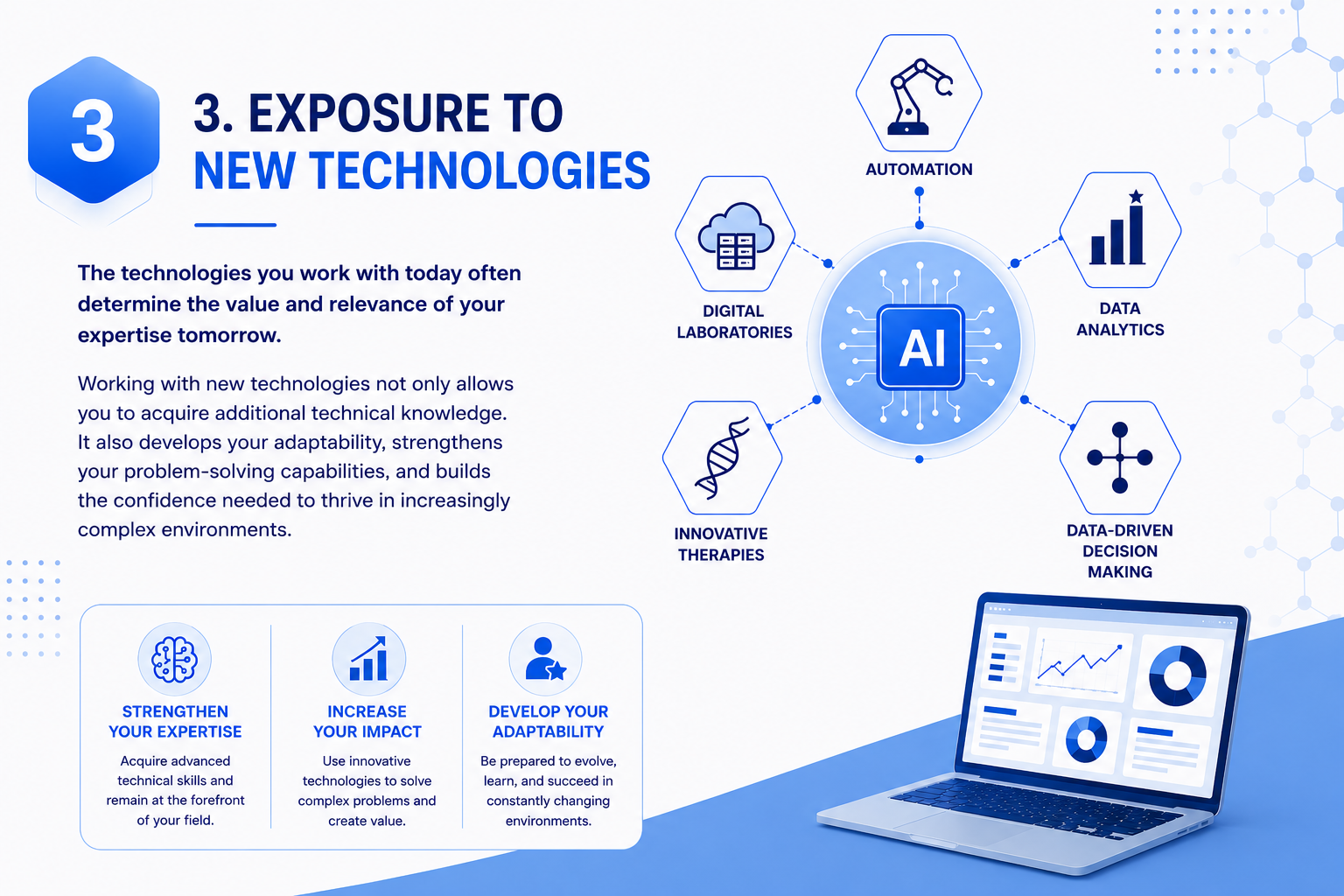
The technologies that scientific professionals work with today often determine the value and relevance of their expertise tomorrow. Whether the environment involves advanced therapies, digital laboratories, artificial intelligence, automation, advanced analytical techniques or data-driven decision-making systems, exposure to innovation increasingly shapes career trajectories across every segment of the life sciences industry.
Working with emerging technologies does considerably more than simply expand technical knowledge. It develops adaptability, strengthens problem-solving capabilities and cultivates the confidence required to navigate change in increasingly complex scientific environments. Professionals who regularly engage with new technologies often become more versatile because they learn to operate in situations where uncertainty, experimentation and continuous improvement are part of everyday work.
It is important to recognise that meaningful technological exposure does not necessarily require working on revolutionary discoveries or highly publicised innovations. In many cases, the greatest professional growth comes from implementing a new digital platform, participating in a process optimisation project, introducing automation into laboratory activities or contributing to the adoption of novel methodologies that improve how scientific work is performed. These experiences progressively shape a professional's ability to understand change and respond effectively to it.
Many scientific professionals are also increasingly aware that technological exposure has become a strategic component of career development. They want to remain connected to where their industry is going rather than limiting themselves to the methods and systems that have defined the past. Organisations that actively invest in innovation and encourage employees to participate in transformation initiatives therefore become particularly attractive environments for ambitious scientific talent
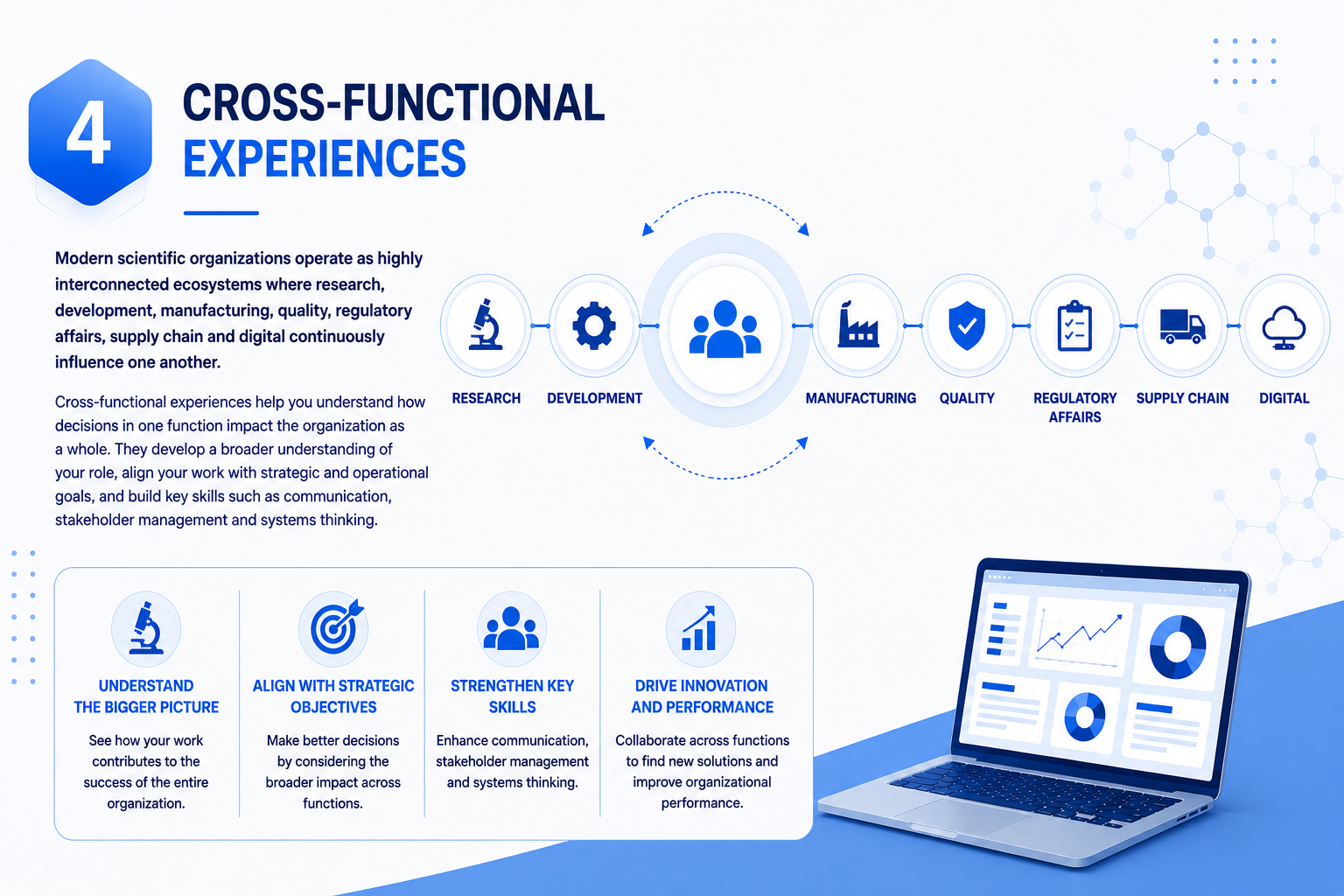
Modern scientific organisations function as highly interconnected ecosystems in which research, development, manufacturing, quality, regulatory affairs, supply chain and digital functions continuously influence one another. Scientific decisions rarely remain confined within a single department, and the ability to understand these interdependencies has become an increasingly valuable capability for professionals seeking to broaden their impact and prepare for future opportunities.
Cross-functional experiences play a critical role in developing this broader perspective. They allow professionals to understand how their work influences other functions, how strategic decisions are made and how scientific activities contribute to operational and business objectives. This wider understanding often leads to more effective collaboration and enables individuals to make decisions that consider the broader implications of their actions.
The value of cross-functional exposure extends well beyond technical knowledge. It develops communication skills, strengthens stakeholder management capabilities and encourages systems thinking, all of which are becoming essential competencies in increasingly complex scientific environments. Professionals who can effectively bridge different disciplines frequently become highly influential because they are able to translate scientific challenges into practical solutions that resonate across multiple functions.
These experiences do not necessarily require a permanent move into another department. Participation in multidisciplinary projects, product launches, technology transfers, digital transformation initiatives or process improvement programmes can provide valuable exposure and significantly broaden a professional's perspective. In many cases, these experiences become the foundation upon which future leadership capabilities are built.
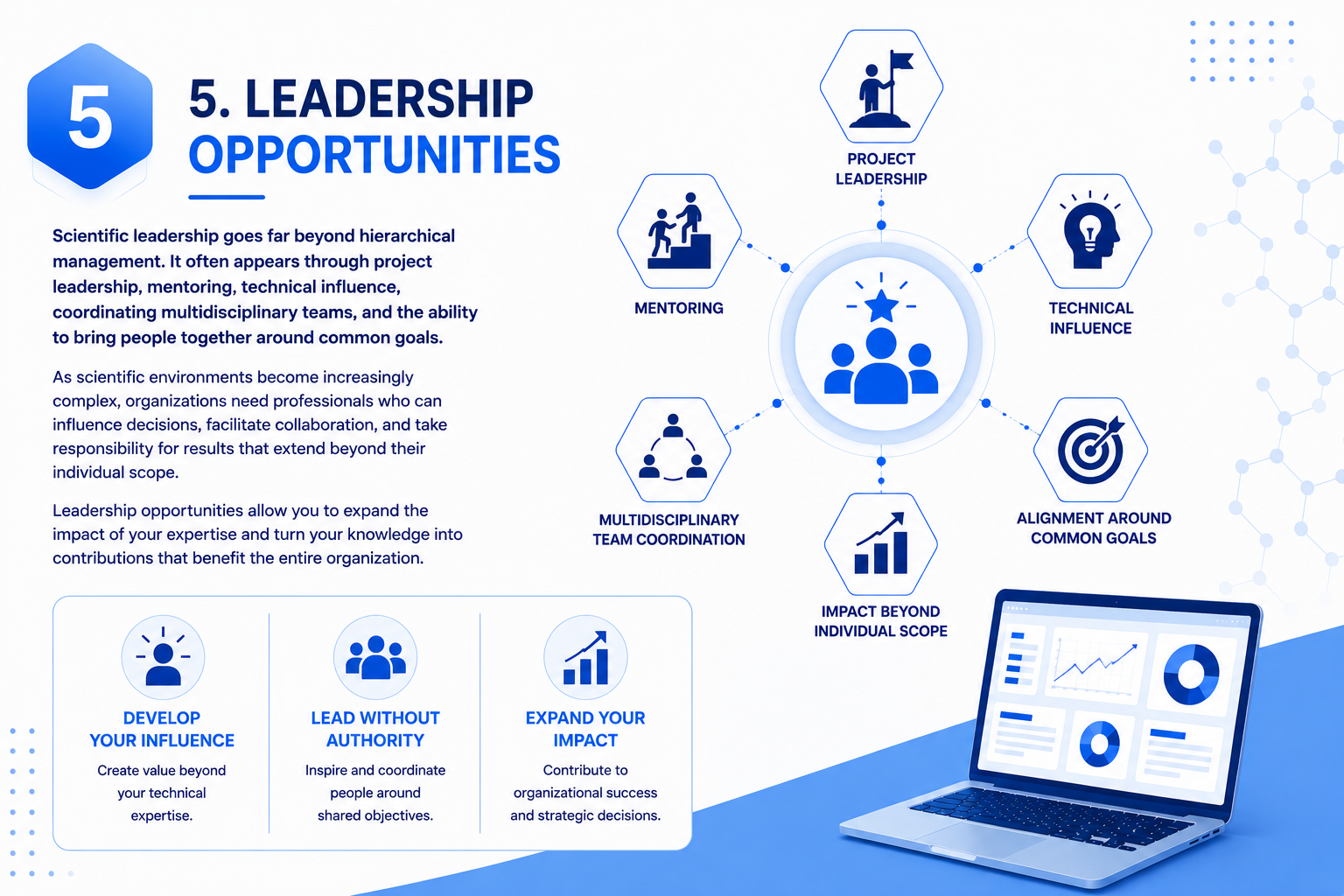
Leadership within scientific organisations extends far beyond formal management responsibilities and organisational hierarchies. It frequently emerges through project ownership, mentoring activities, technical influence, decision-making responsibilities and the ability to align people around common objectives. Many scientific professionals begin developing leadership capabilities long before they receive a managerial title, often through experiences that require them to coordinate activities, solve complex problems and guide others through uncertainty.
As scientific environments become increasingly sophisticated, organisations require professionals who can influence decisions, facilitate collaboration and take ownership of outcomes that extend beyond their individual responsibilities. Technical expertise remains essential, but it is increasingly complemented by the ability to communicate effectively, inspire confidence and create alignment among diverse stakeholders.
Leadership opportunities are also important because they allow scientific professionals to extend the impact of their expertise. They transform knowledge from an individual contribution into something that supports teams, improves organisational performance and helps shape strategic direction. For many experienced professionals, this transition represents a natural evolution in which career satisfaction becomes increasingly linked to the ability to help others succeed and contribute to a broader mission.
A career that offers opportunities to develop leadership capabilities often provides significantly greater long-term fulfilment because it creates additional pathways for growth and enables professionals to contribute in ways that go far beyond technical execution alone.
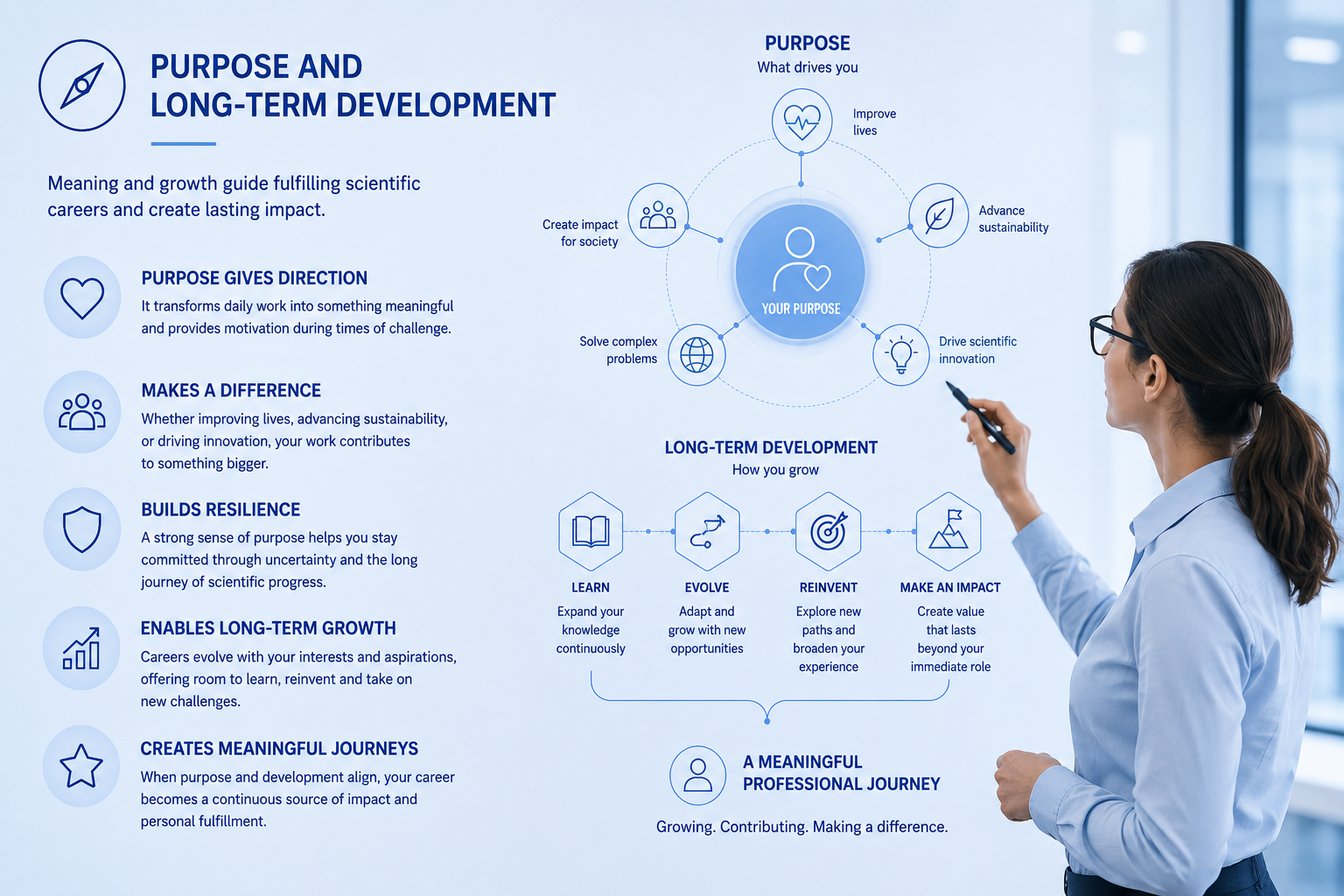
At some point in every career, the questions professionals ask themselves become deeper and more personal. The focus gradually shifts away from the next promotion, the next project or the next salary increase and begins to centre on a much broader reflection: what kind of professional do I want to become and what kind of contribution do I want my work to make?
Purpose plays a fundamental role in answering these questions. For some individuals, purpose comes from developing therapies that improve patients' lives. For others, it comes from advancing sustainability, contributing to scientific innovation or solving complex problems that have a meaningful impact on society. Regardless of its specific form, purpose provides emotional and intellectual depth to professional life and helps transform daily activities into something that feels genuinely meaningful.
Purpose also becomes increasingly important because scientific careers frequently require resilience and patience. Research programmes can last for years, product development cycles are often long and meaningful progress may occur gradually rather than through immediate breakthroughs. Having a strong sense of purpose helps professionals remain motivated during periods of uncertainty and reminds them that their efforts contribute to something larger than the immediate task at hand.
Long-term development is inseparable from this idea of purpose. The most fulfilling careers are not static; they continue to evolve as interests, aspirations and opportunities change over time. They provide room for learning, reinvention and new experiences that allow professionals to remain engaged and intellectually stimulated throughout different stages of their journey.
When purpose and development work together, careers become more than a succession of positions and responsibilities. They become meaningful professional journeys that continue to make sense and create value as individuals evolve both personally and professionally.
How to use this framework
These six pillars give you a practical way to think about your own career. They help you look beyond the surface of a job description and ask better questions about whether an opportunity truly fits your ambitions.
A good role is not only one that matches your experience today. It is one that helps you build the experience you will need tomorrow. It supports your growth, keeps you close to innovation, strengthens your perspective, and gives meaning to your contribution.
That is what makes a scientific career truly fulfilling. It is a career with momentum, clarity, relevance, and purpose.
How SQUIPP can support you
At SQUIPP, we believe that quality recruitment goes far beyond simply matching a CV with a job description. We help scientific professionals understand how an opportunity aligns with their long-term ambitions, identify the environments in which they can truly thrive and gain a deeper understanding of the skills and trends that are shaping the future of the life sciences industry.
Because beyond finding your next position, the real objective is to build a meaningful career that continues to create value, foster growth and provide fulfilment for many years to come.
Useful resources
- EURAXESS Career Development — a useful platform for researchers looking for tools, guidance, and career development support.
- Science Careers Resources — practical advice on career planning, professional growth, and navigating scientific careers.
- Genetics Society of America Career Dev Toolkit — a structured toolkit with resources for professional development and career exploration.
- NIAAA Research Training and Career Development Resources — a helpful resource hub for training and career development support.
- Fred Hutch Office of Scientific Career Development — support and guidance for scientists developing their career path.
What are the six pillars of a fulfilling scientific career?
They are clear promotion paths, continuous learning and training, exposure to new technologies, cross-functional experiences, leadership opportunities, and purpose with long-term development.
Why do these pillars matter for scientific professionals?
Because they help you build a career that stays relevant, meaningful, and adaptable in a fast-changing scientific environment.
Does career growth in science always mean becoming a manager?
No. Many professionals grow through technical progression, subject matter expertise, project leadership, or broader influence without taking a people management role.
Why is continuous learning so important in science?
Because scientific knowledge, tools, and expectations evolve constantly. Ongoing learning helps you stay effective and prepared for future opportunities.
What makes cross-functional experience valuable?
It gives you a wider understanding of how the organisation works and helps you develop skills that are useful in more complex and strategic roles.
Why is purpose important in a scientific career?
Because purpose gives meaning to your work. It helps you stay motivated, resilient, and connected to a long-term professional path.