
AI and GenAI ROI in Pharma, Biotech and Chemicals
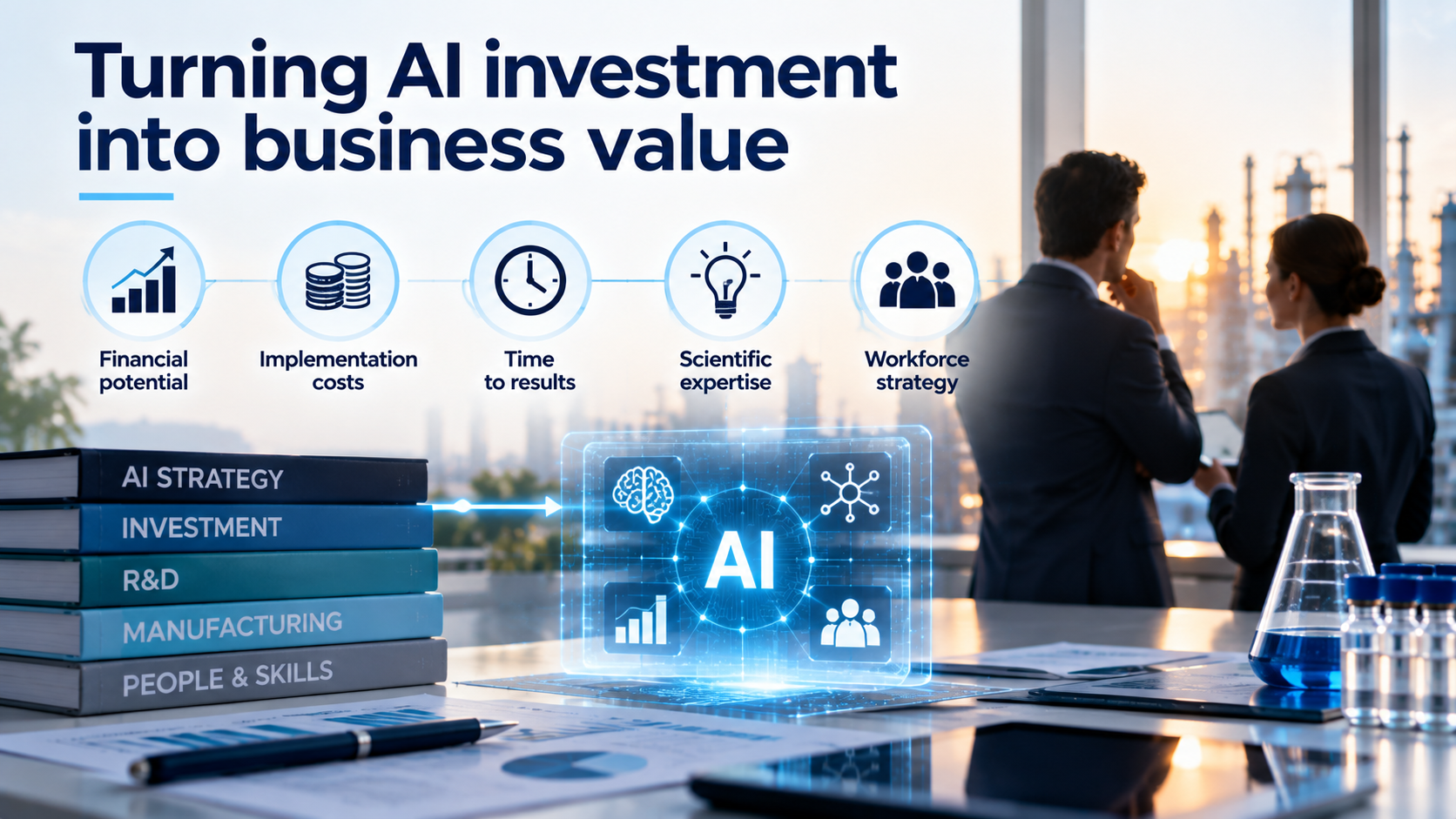
Artificial intelligence (AI) and generative AI (GenAI) are creating new opportunities for pharmaceutical, biotechnology and chemical companies to improve productivity, reduce operational costs and accelerate innovation.
But how can companies turn these opportunities into measurable financial returns while securing the scientific expertise needed to achieve them?
Why are some AI investments delivering tangible business results while others struggle to demonstrate their value?
This article examines what makes the difference, where the strongest opportunities lie, and how the evolving demand for scientific talent could influence the success of future investments.
Why AI and GenAI investments are delivering uneven financial returns
The enthusiasm surrounding investment in AI has still to translate into consistent financial performance across the life sciences industry. A January 2025 McKinsey study, based on a survey of more than 100 pharmaceutical and medical technology leaders, found that every respondent had experimented with GenAI and more than two-thirds planned to increase investment significantly. Only 5% reported achieving consistent, significant financial value and competitive differentiation.
The wider European economy reflects a similar acceleration in adoption. According to Eurostat, 20% of EU enterprises with at least ten employees used AI technologies in 2025, compared with 13.5% in 2024. Among large enterprises, adoption reached approximately 55%. These figures demonstrate the growing presence of advanced applications in business operations, while the McKinsey findings highlight the challenge of converting technological progress into sustained commercial results.
A central difficulty lies in how companies measure value. Improvements in processing speed, accuracy or employee productivity can be substantial, but their contribution to profitability depends on what happens after the improvement is achieved. Additional employee capacity creates economic value when it supports commercially useful work, while faster processes become financially meaningful when they reduce expenditure, increase throughput or shorten activities with measurable business consequences.
The complexity of scientific and industrial environments adds another dimension. Implementing these applications may require extensive data preparation, integration with established infrastructure, technical validation and ongoing human oversight. These requirements affect both implementation expenditure and the period before an application can begin delivering benefits. An initiative that performs well during a pilot may therefore produce a different financial outcome when deployed across a regulated organisation.
For executives, the relevant measure of success is the economic contribution of an application over time, assessed against the resources committed to achieving that result. This provides a more reliable basis for evaluating investment than adoption figures or productivity improvements considered in isolation.
Where AI and GenAI create financial value
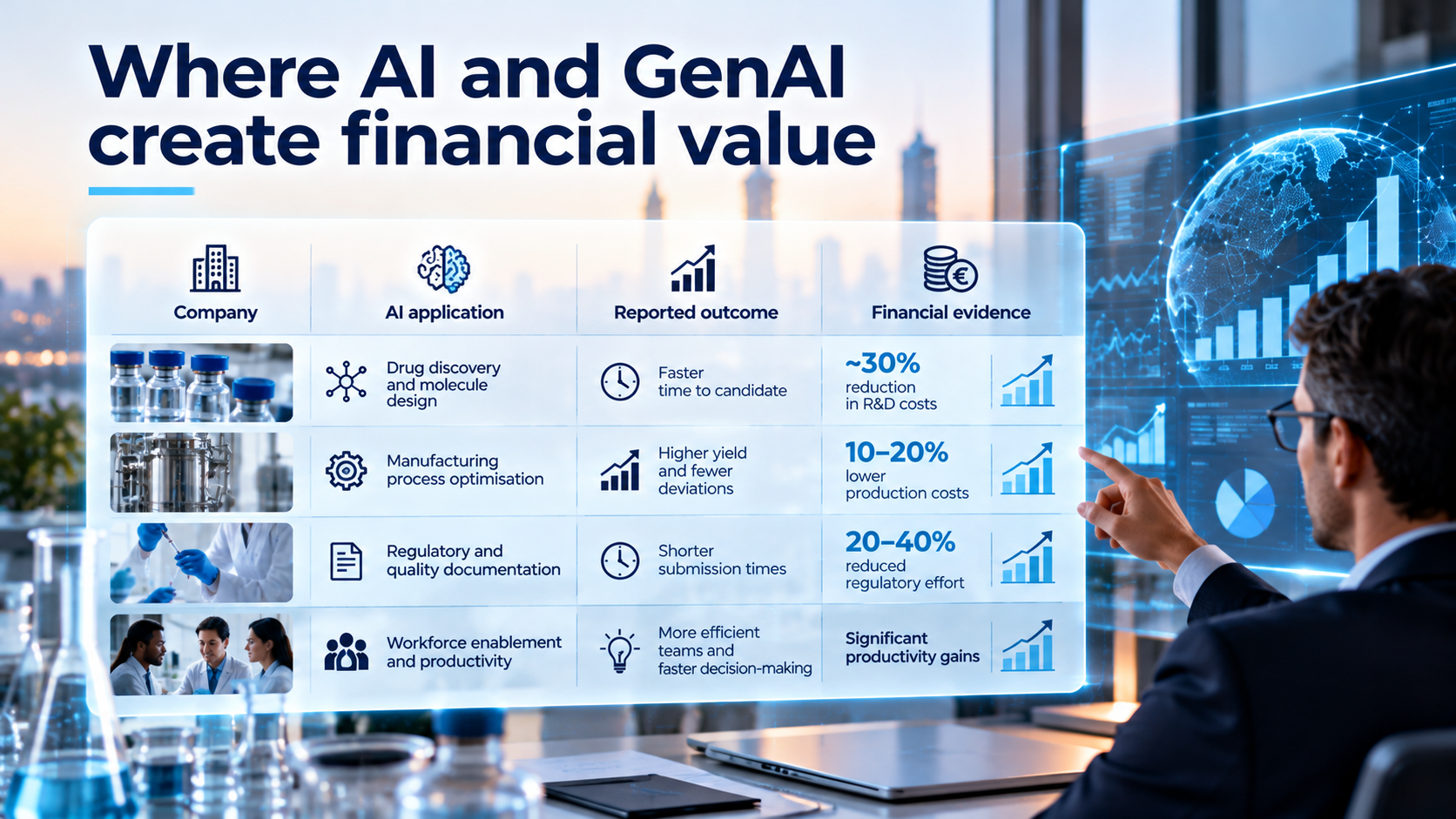
AI and GenAI offer different routes to economic value across pharmaceutical, biotechnology and chemical operations. In research and development, their potential includes improving the selection of scientific candidates, accelerating the analysis of complex information and increasing the productive capacity of specialist teams, while in industrial environments, the opportunities often centre on operating costs, process reliability and the efficient use of materials and equipment.
Through AI-supported molecular modelling, compound screening and experimental design, researchers can concentrate resources on promising scientific programmes, with GenAI complementing these activities through literature analysis, knowledge retrieval and technical documentation. McKinsey has estimated that generative AI could unlock $60 billion to $110 billion in annual economic value across the pharmaceutical and medical-products industries, although this represents potential sector-wide value rather than financial returns already realised by individual companies.
In manufacturing, predictive models can help engineers identify process variations, anticipate equipment failures and improve production performance, while chemical producers can apply similar analytical approaches to energy consumption, process stability and asset reliability. Quality and regulatory functions also present opportunities for more efficient document review, technical information retrieval and the preparation of materials requiring expert verification.
The experiences of Sanofi, Novo Nordisk and BASF illustrate how these opportunities can generate different forms of business value, depending on the activities involved and the outcomes companies seek to achieve.
At Sanofi, the benefits are reflected in identifiable operating savings. In its 2025 annual regulatory filing, the company describes SimpLY, an internally developed AI-enabled yield optimisation system that analysed more than 13,000 batches of Lovenox/Clexane at manufacturing sites in France and Singapore. Based on its internal analysis of batch performance, Sanofi estimates that the resulting process improvements generated approximately €10 million in annual cost savings, providing a concrete financial reference point, although the company has not disclosed the complete investment and operating costs needed to calculate net ROI.
At Novo Nordisk, the economic potential is associated with additional development capacity. Its GenAI application, NovoScribe, supports the preparation of clinical study reports and, according to a MongoDB customer case study, has reduced report writing time by approximately 90%, while a writing workload previously requiring 42 full-time staff could reportedly be managed by three. These figures describe a substantial change in workflow productivity rather than confirmed workforce reductions, with the commercial significance arising from the capacity available for additional documentation work and the ability of medical writers to concentrate on scientific review and activities requiring professional judgement.
BASF offers another perspective through the operational value of making industrial knowledge more accessible. At its acetylene plant in Geismar, Louisiana, the company introduced PlantGPT, an AI-based system drawing on approximately 800 technical documents, including engineering handbooks, training materials and operational information. As described in a BASF investor presentation, the system helps operators access relevant guidance when addressing plant conditions and operational questions, contributing to more effective knowledge transfer, faster access to technical expertise and better-informed decisions. BASF has not published a specific net financial return for PlantGPT.
The three cases illustrate how financial performance can be measured through direct cost savings at Sanofi, additional development capacity at Novo Nordisk and improved operational effectiveness at BASF. Evaluating their economic contribution requires different measures, reflecting the investment costs, commercial value of productivity gains and improvements in industrial performance associated with each application.
How companies should prioritise AI and GenAI investments
The commercial attractiveness of an AI initiative depends on the relationship between its expected benefits, total costs and implementation schedule. Companies evaluating several opportunities need a consistent way to compare projects whose financial potential, technical complexity and staffing requirements may differ considerably.
General-purpose GenAI applications for information retrieval or document preparation may involve software licensing, workflow integration, employee training and oversight. Specialised scientific and industrial systems can require more extensive investment in data infrastructure, technical development, validation and ongoing maintenance. These differences affect the amount of capital committed before benefits emerge and the expenditure needed to sustain them.
A practical investment assessment should establish four elements before a project receives funding.
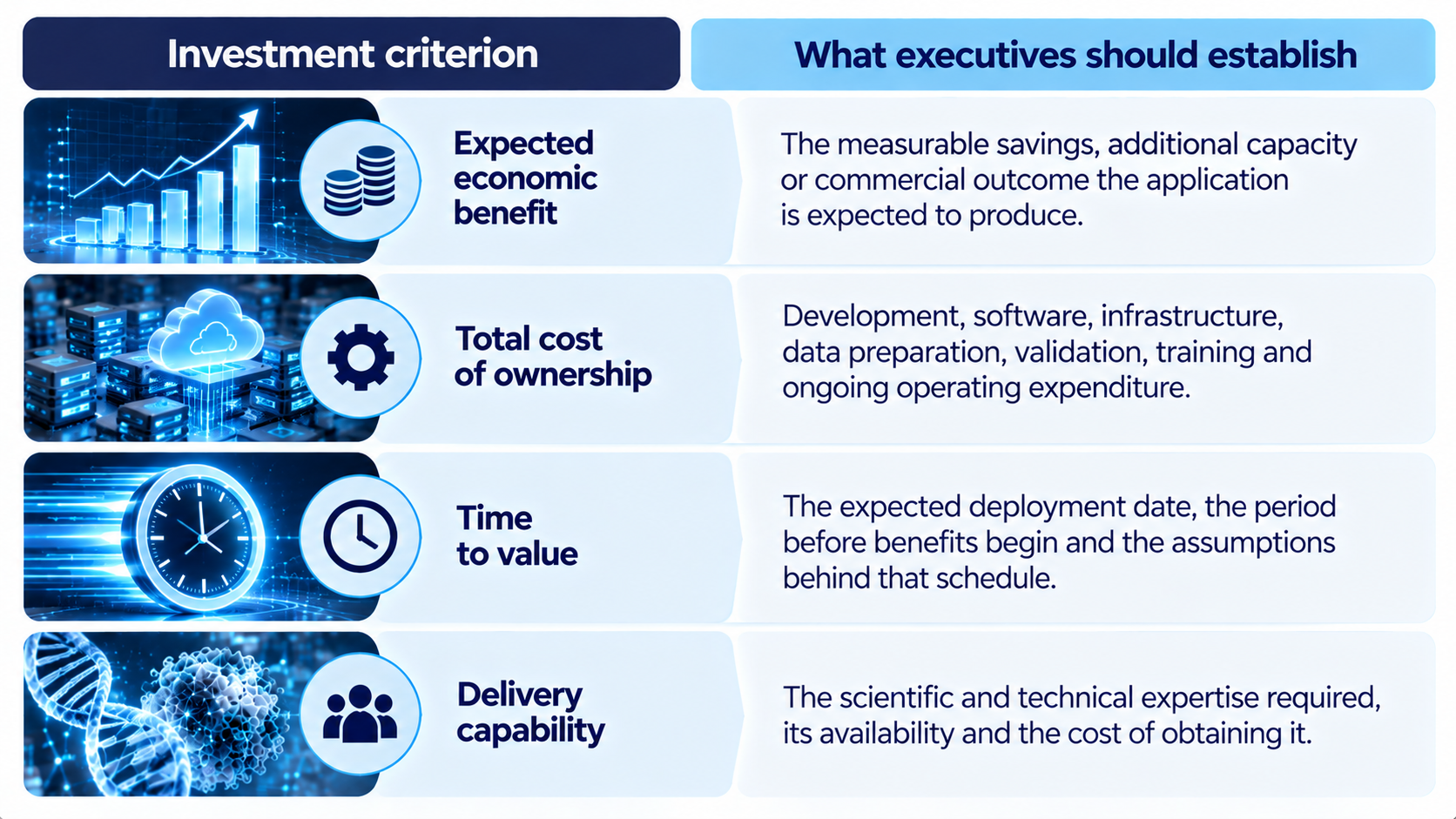
The financial evaluation should also reflect the difference between a projected benefit and a realised return. Where benefits and costs can be expressed in monetary terms, a basic ROI calculation compares net benefits with total investment costs over a defined period. Projects with longer development schedules or uncertain benefits may require scenario analysis, discounted cash-flow calculations and sensitivity testing before they can be compared reliably.
Implementation timing can materially change the result. Consider a hypothetical chemical manufacturer expecting €300,000 in annual savings from an AI-enabled process improvement. If the company must wait six months to secure the expertise required for deployment, approximately €150,000 in anticipated savings would be postponed, assuming the benefits would otherwise accrue evenly throughout the year. The project may remain commercially attractive, but its expected payback period and cash-flow profile would change.
This makes the availability of qualified professionals a relevant input to investment appraisal. A project requiring a specialist who can be recruited within weeks has a different delivery profile from one dependent on scarce expertise with an uncertain hiring timeline. The cost of obtaining that expertise should be included in the budget, while the expected recruitment period should be reflected in the deployment schedule.
Companies can also improve investment efficiency by matching staffing arrangements to the duration of the work. A defined integration or validation assignment may justify external specialist support, particularly when the capability will be needed intensively for a limited period. Permanent recruitment may be more economical when the same expertise will support multiple applications or remain necessary for ongoing operations. Developing existing employees can reduce the need for additional hiring when their scientific knowledge provides a suitable foundation for acquiring complementary digital skills.
The practical advantage of this approach is greater comparability between investment proposals. Executives can assess projects against realistic costs and schedules, challenge assumptions about projected benefits and direct funding towards applications with a credible route to commercial value.
How AI and GenAI are changing scientific skills and recruitment priorities
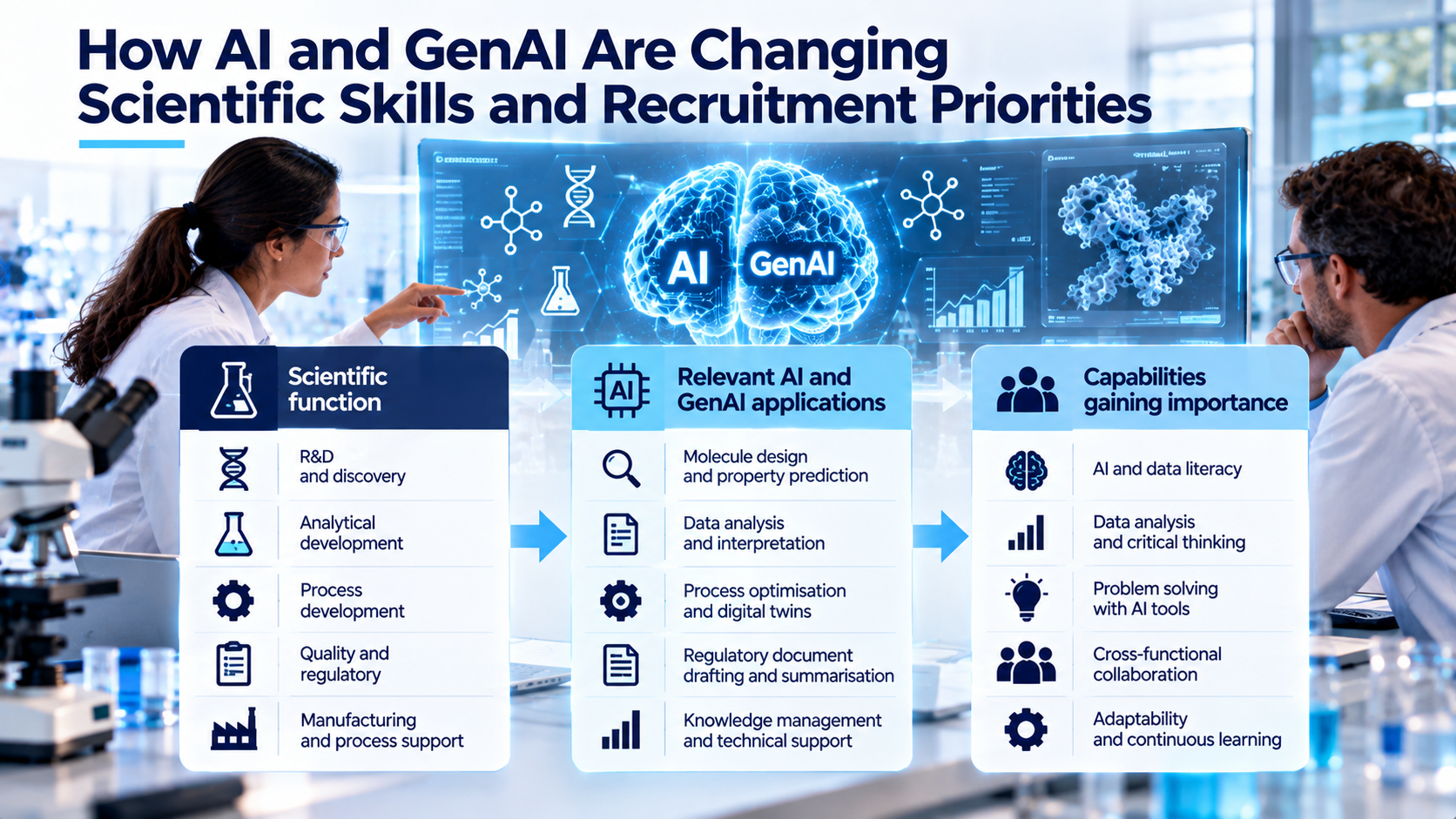
The growing use of AI and GenAI is changing the technical capabilities required across scientific and industrial functions. For HR directors, the challenge is increasingly specific: understanding which existing roles are evolving, which capabilities can be developed internally and where new expertise is needed to support planned applications.
The World Economic Forum's Future of Jobs Report 2025 estimates that 39% of workers' existing skills will change or become outdated by 2030, while 85% of surveyed employers plan to prioritise upskilling. Within pharmaceutical, biotechnology and chemical companies, these changes are shaped by the need to combine digital proficiency with scientific understanding, technical judgement and regulatory responsibility.
The requirements vary significantly between functions.
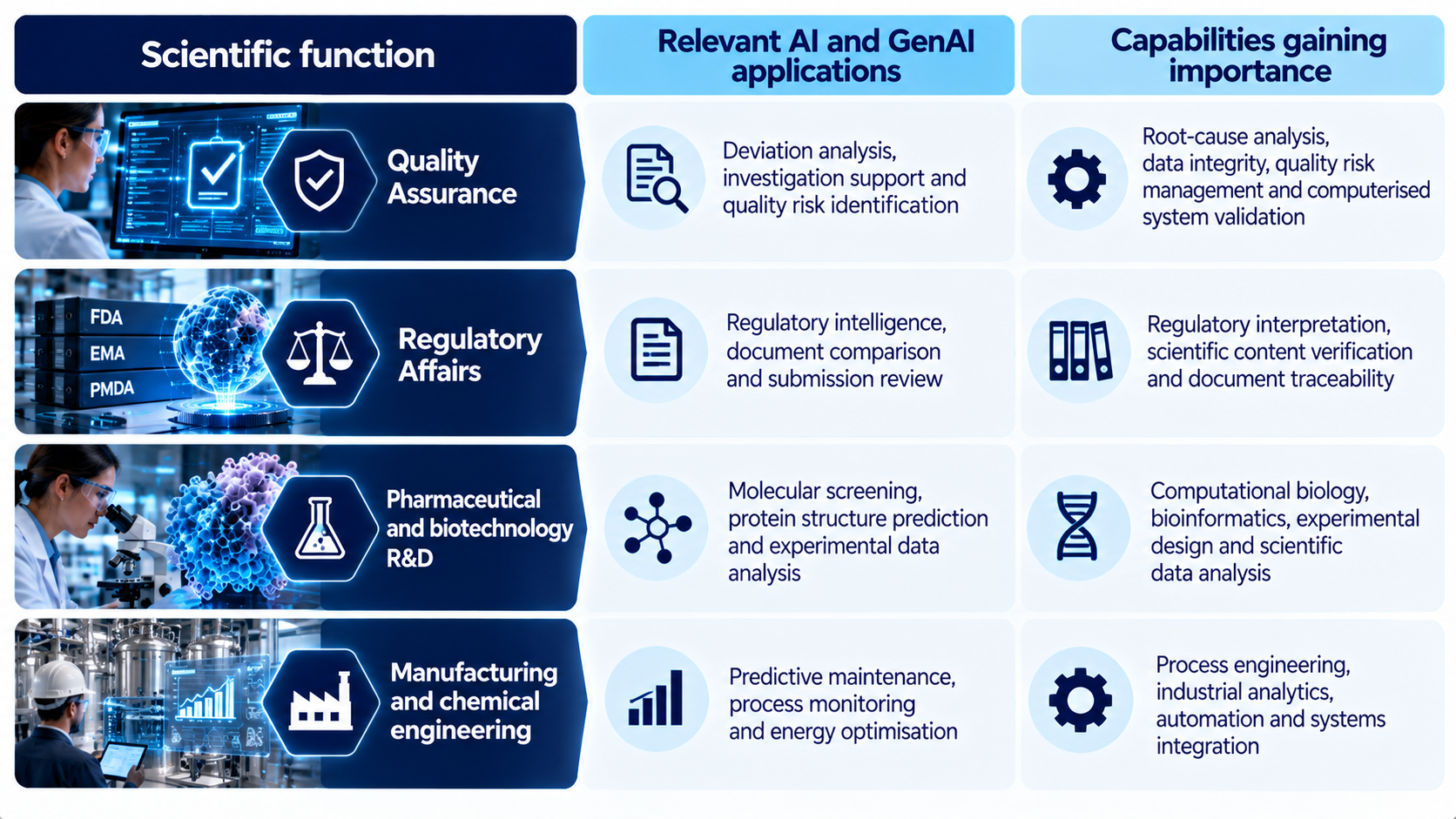
Quality Assurance and Regulatory Affairs offer substantial opportunities to develop existing professionals. Their experience with compliance, documentation and scientific assessment provides an essential foundation for overseeing AI-assisted processes. Training can extend these capabilities into data interpretation, output verification and the appropriate use of computerised systems without losing the technical judgement required in regulated environments.
Research-intensive organisations may face more specialised recruitment requirements. Computational biologists, bioinformaticians and scientific data engineers combine disciplines that are important to data-intensive research, while industrial operations increasingly benefit from engineers who understand both production processes and analytical technologies. Employers need to establish which combinations of expertise are essential for a particular role and which can reasonably be developed after recruitment.
This calls for greater precision in candidate assessment. A job title or scientific qualification provides an initial indication of experience, but often reveals little about the responsibilities a professional has performed. Within analytical science, for example, routine HPLC testing, analytical method development, troubleshooting and method validation involve different technical competencies. An employer seeking someone to support a complex laboratory application needs to identify the relevant experience rather than treating these backgrounds as interchangeable.
The same principle applies to AI-related recruitment. A candidate's familiarity with digital tools should be assessed alongside their ability to interpret scientific results, recognise technical limitations and work within the requirements of the relevant function. For positions involving system implementation, evidence of cross-functional collaboration, validation experience or the integration of technical processes may be more useful than a broad claim of AI proficiency.
HR directors can turn these requirements into a more effective workforce strategy by conducting a capability assessment linked to the organisation's planned projects. Such an assessment should identify the expertise already available, determine where targeted training is feasible and distinguish ongoing specialist needs from temporary implementation requirements. It should also establish realistic recruitment lead times and the evidence candidates will need to demonstrate during selection.
This approach gives recruitment teams clearer specifications, helps hiring managers evaluate candidates consistently and enables organisations to direct training expenditure towards capabilities with an identifiable business purpose. It also strengthens collaboration between HR, scientific leaders and technology teams by making workforce decisions more closely connected to the work employees will actually perform.
Making the next AI investment decision count
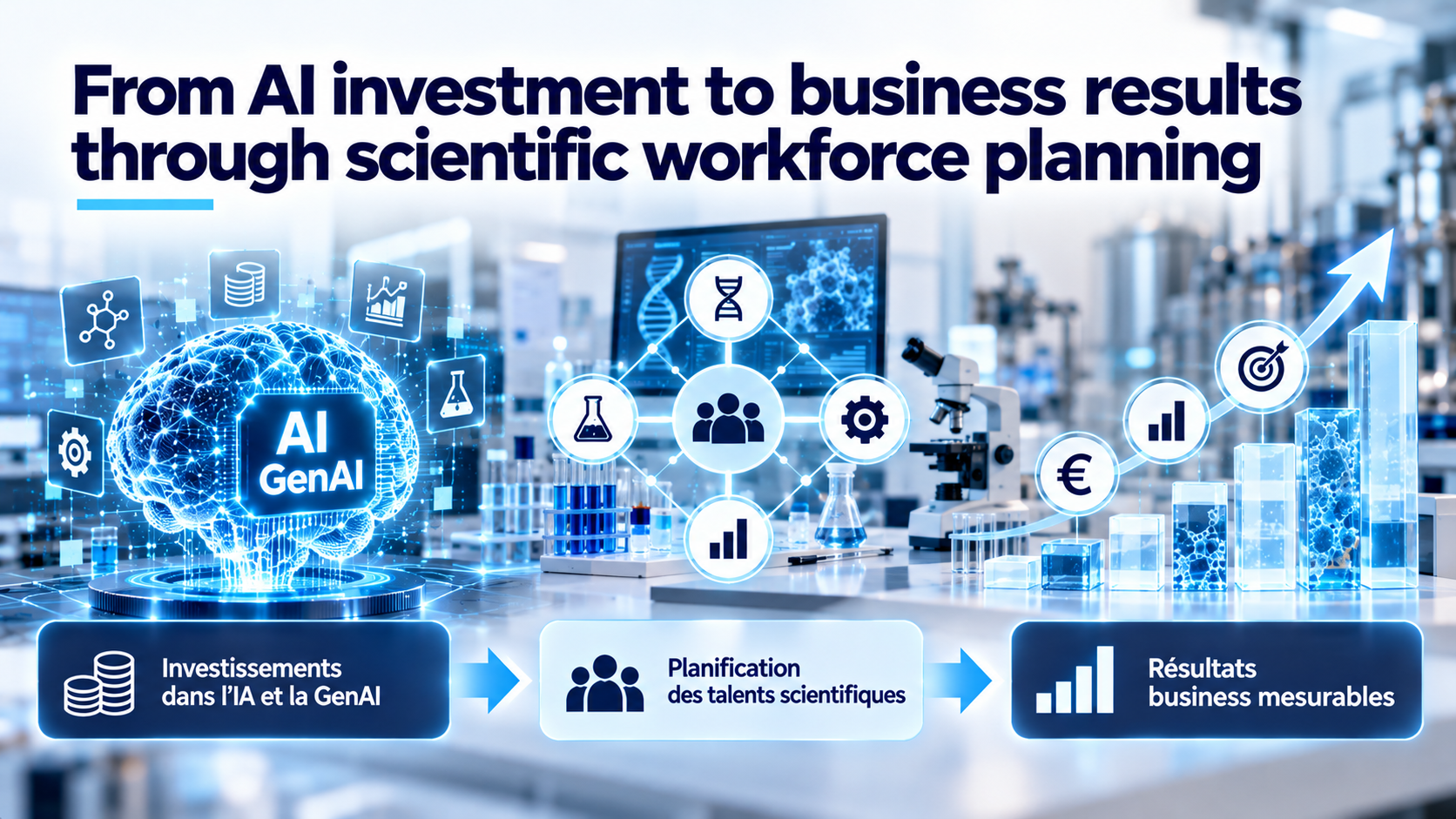
As pharmaceutical, biotechnology and chemical companies increase their investment in AI and GenAI, the ability to translate technological advances into financial performance will become an increasingly important measure of competitive advantage. The challenge for executives is to identify which applications offer the strongest commercial prospects and establish whether their organisations have the resources and expertise to deliver them.
The financial case for an AI initiative can change considerably once implementation requirements are taken into account. Access to qualified scientific professionals, the time needed to develop specialist capabilities and the cost of integrating new technologies into established operations can influence both the investment required and the speed at which benefits emerge. Assessing these factors before committing capital allows companies to distinguish commercially attractive opportunities from projects whose projected returns depend on unrealistic delivery assumptions.
For CEOs and HR directors, this creates a compelling reason to bring investment planning and scientific workforce strategy into closer alignment. Early collaboration between business, technical and HR leaders can reveal critical capability gaps, clarify recruitment and training requirements, and support more informed decisions about where to allocate resources.
The companies that emerge as industry leaders in the years ahead will be those that make the most informed AI and GenAI investment decisions today, carefully assessing where to allocate capital, which opportunities offer the greatest financial potential and what it will take to realise that value.
Why are AI and GenAI investments delivering uneven financial returns in the life sciences industry?
Financial results depend on how effectively companies convert improvements in productivity, accuracy and efficiency into measurable economic benefits. Implementation costs, technical validation, integration requirements and access to qualified professionals can significantly influence the returns achieved.
Where can AI and GenAI create the greatest financial value in pharmaceutical, biotechnology and chemical companies?
Opportunities extend across research and development, manufacturing, quality and regulatory activities. Applications can contribute to lower production costs, faster scientific analysis, greater development capacity and improved process reliability, with their financial value depending on the business outcomes achieved.
How should companies evaluate the return on investment of AI and GenAI projects?
An effective assessment considers expected economic benefits, total implementation and maintenance costs, time to value and the expertise required for deployment. Financial evaluation should also account for uncertainty in projected benefits and the difference between operational improvements and realised financial returns.
How do AI and GenAI influence scientific recruitment priorities?
Growing adoption is increasing demand for professionals who combine scientific expertise with data analysis, digital proficiency and technical judgement. Recruitment requirements vary across functions, from bioinformatics and computational biology in R&D to computerised system validation, regulatory interpretation and industrial analytics.
Should companies recruit new specialists or develop the skills of existing employees?
The decision depends on the expertise already available, the complexity of planned applications and the duration of the work. Upskilling can extend established scientific capabilities, while specialist recruitment or external expertise may be appropriate for technical requirements that exceed internal capacity.
Why should CEOs and HR directors align investment decisions with scientific workforce planning?
The availability, cost and recruitment lead time of qualified professionals can influence implementation schedules and expected financial returns. Aligning workforce planning with investment priorities enables companies to assess delivery requirements earlier, allocate resources more effectively and establish realistic expectations for project performance.